Food and water in a bug-out bag follow a rule that trips up almost every beginner: weight. It is easy to imagine packing hearty meals and plenty of water, right up until you try to carry it all and discover your bag now weighs as much as a small child. The art of go-bag provisioning is getting the most survival value from the least weight, because a bag too heavy to move with is a bag that gets left behind. Here is how to feed and hydrate yourself for three days without breaking your back.
Water: carry a little, make a lot
Water is heavy, about eight pounds per gallon, so you cannot carry three days of it and still move. The solution is to carry a modest amount to start and pack the ability to make more. Keep a liter or two on you, and let a filter turn every stream, tap, and puddle you pass into safe drinking water. This is the single most important provisioning decision in the whole bag: a filter weighs almost nothing and effectively gives you unlimited water.
Unlimited water for a few ounces

Affiliate note: buy through this link and ThisTracks may earn a small commission at no extra cost to you. We only list gear that is in stock and that we would carry ourselves.
Add water purification tablets as a light backup in case the filter is lost or clogged. Together they weigh almost nothing and remove water as a limiting factor. For the deeper skill of locating water when you are truly out, see finding and collecting water in the wild.
Food: calories, not cuisine
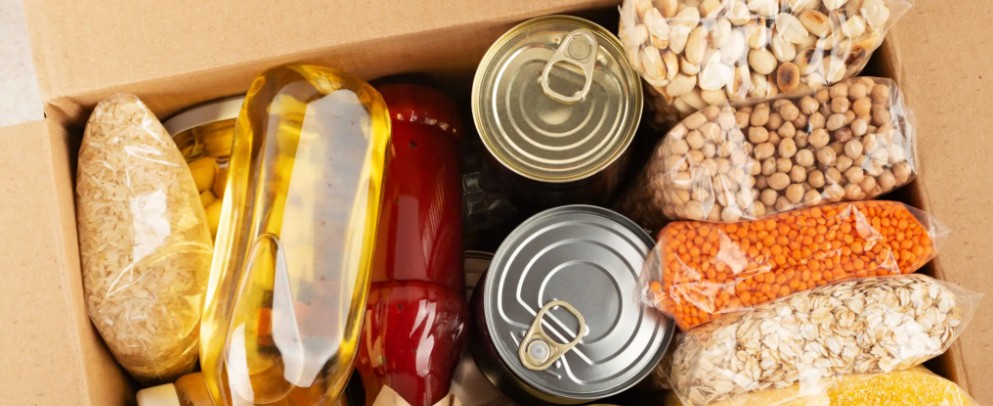
Go-bag food has three jobs: pack a lot of calories into little weight, require no cooking, and last a long time on the shelf. Notice that taste and nutrition balance are not on that list. For three days, you are not eating for health; you are eating for energy and morale. The best go-bag foods are:
| Category | Examples | Why it works |
|---|---|---|
| Calorie-dense bars | Energy bars, ration bars | Most calories per ounce, zero prep |
| Nut butters and trail mix | Peanut butter packets, mixed nuts | Dense fat and calories, filling |
| Jerky and dried meats | Beef, turkey jerky | Shelf-stable protein, no cooking |
| Ready-to-eat pouches | Tuna, chicken packets | Edible cold, straight from the pouch |
| Quick comfort | Hard candy, electrolyte mix, caffeine | Morale and energy for very little weight |
- Calorie-dense bars: energy bars, protein bars, and purpose-made emergency ration bars pack the most calories per ounce and need no preparation.
- Nut butters and trail mix: dense with calories and fat, filling, and shelf-stable.
- Jerky and dried meats: protein that keeps well and needs no cooking.
- Ready-to-eat pouches: tuna or chicken packets, and shelf-stable meals that can be eaten cold if needed.
- Quick comfort: hard candy, electrolyte drink mixes, and a little caffeine keep morale and energy up for very little weight.
No-cook is the rule, not the exception
Pack your bag as if you will never be able to light a stove, because in an evacuation you often cannot. Everything should be edible straight from the package. A stove and hot meal are a nice bonus if the situation allows, but building your food plan around cooking is a trap: it adds weight in fuel and cookware and fails you exactly when you are on the move or in a crowded shelter. Keep the food no-cook, and treat any hot meal as a luxury rather than a plan.
A rough calorie target for three days
As a planning benchmark, aim for roughly 1,800 to 2,400 calories per person per day in the bag, on the lower end of normal daily intake since activity may be reduced during a sheltering scenario but elevated during active evacuation on foot. That works out to roughly two to three pounds of dense, no-cook food per person for a three-day bag, a manageable weight that still leaves room for water, a filter, and everything else the bag needs to carry.
Match the food to the eater
A go-bag feeds a specific person, so provision for who actually carries it. A child needs familiar snacks they will actually eat under stress, not unfamiliar ration bars. Anyone with dietary restrictions or medical needs, such as diabetes, must pack accordingly, including fast sugar for a low. Do not forget an infant’s formula or a pet’s food if they are part of your evacuation. The generic packing list is a starting point, not the finish.
Rotate it, or it fails you
Go-bag food quietly expires and go-bag water quietly grows stale, so a bag packed once and forgotten is a false sense of security. Twice a year, open every bag, check dates, and refresh the food and water. Rotating expiring items into your normal meals means nothing is wasted. This is the same twice-yearly check that keeps your whole go-bag current, and it takes only a few minutes.
Packing for taste fatigue over three days
A detail beginners rarely consider: eating the same bar or ration three days straight gets genuinely hard to stomach, and appetite often drops under stress in the first place. Pack a little variety, even within the no-cook constraint, sweet and savory, chewy and crunchy, so day three’s meal is not a repeat of day one’s that a tired, stressed person has to force down. A go-bag that gets eaten is worth more than a “perfectly optimized” one that sits untouched because nothing in it sounds appealing.
Common questions
Are freeze-dried backpacking meals a good choice for a go-bag?
They are excellent for weight and calorie density but require boiling water and time to rehydrate, which conflicts with the no-cook principle for a fast-evacuation bag. They fit better in a vehicle kit or home supply where a stove and time are more likely available than in a grab-and-run pack.
How often should the water in a go-bag actually be replaced?
Commercially bottled water is typically fine for a year or more per its printed date, but check bottles twice yearly along with your food rotation for any cloudiness, odd smell, or container damage. Water stored in reused containers, rather than sealed commercial bottles, should be replaced more frequently, roughly every six months.
Should everyone’s bag have identical food, or should it vary by person?
It should vary. Beyond dietary needs and allergies, personal preference genuinely matters under stress: a food someone will actually eat when anxious and tired beats a “better” option they will skip. Let each capable family member have some input into their own bag’s food choices.
Go-bag food and water, condensed
- Carry a liter or two of water plus a filter. Do not try to carry three days of it.
- Choose calorie-dense, no-cook, long-shelf-life food. Energy over nutrition.
- Bars, nut butter, jerky, and ready-to-eat pouches are the workhorses.
- Target roughly 1,800-2,400 calories per person per day, about two to three pounds of food total.
- Provision for the actual person: kids, medical needs, infants, pets.
- Check and rotate every bag twice a year.
Feeding yourself out of a go-bag is a solved problem the moment you stop thinking about meals and start thinking about weight, calories, and water you can make rather than carry. Pack light, pack no-cook, add a filter, and match it to the person, and your bag will keep you fueled and hydrated for the three days that matter without ever becoming too heavy to lift when it is time to go.