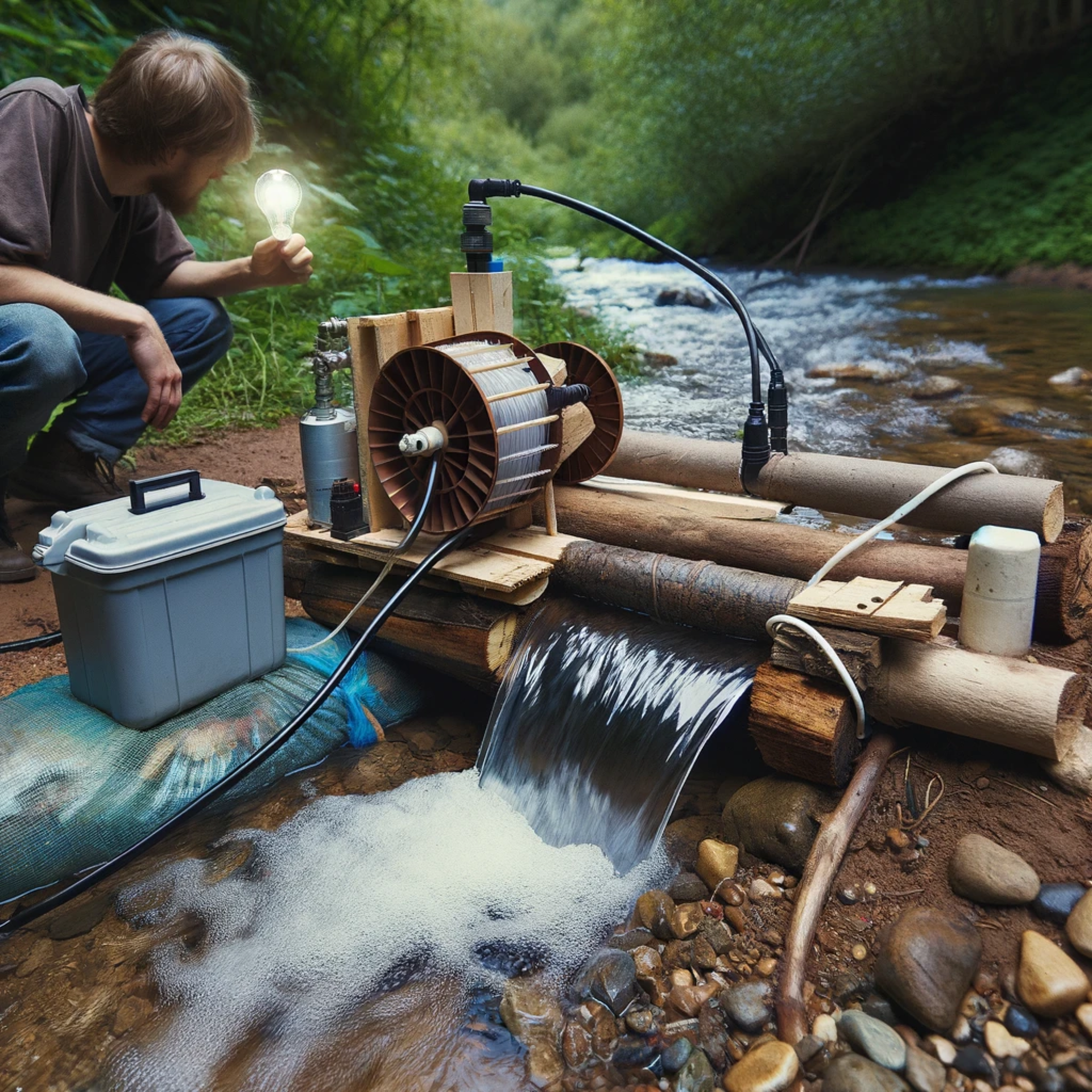
Among the renewable energy options for off-grid living, one stands quietly above the rest for the lucky few who can use it: micro-hydroelectric power. If you have a stream or river with year-round flow on your property, a micro-hydro system can produce steady power around the clock, in every season, rain or shine, day or night. It is the most consistent and often the most cost-effective renewable source there is, but it comes with a strict requirement that most properties cannot meet. This guide explains how micro-hydro works, what it needs, and whether it might be right for you.
Why moving water is the ideal power source
Micro-hydro has a decisive advantage over both solar and wind: consistency. The sun sets and clouds pass, and the wind gusts and dies, but a flowing stream runs continuously. That means a micro-hydro system produces power twenty-four hours a day, requires far less battery storage because generation never stops, and often delivers more total energy from a modest installation than a much larger solar array. For a property with the right water, it is frequently the best renewable investment available, quietly generating a steady baseline of power that the other sources cannot match.
The two things it absolutely requires
Micro-hydro power depends on two factors, and you need enough of at least one of them:
- Head: the vertical drop the water falls through. More drop means more energy, so a steep stream or a site where you can channel water down a slope is ideal.
- Flow: the volume of water moving past, measured over time. More flow means more energy, so even a low drop can work with a large, steady flow.
The power available comes from combining head and flow. A high mountain stream with lots of drop can produce good power from modest flow, while a larger, flatter stream needs more volume to compensate for less head. The essential point is that you need a reliable, year-round water source with usable head or flow, and this is exactly the requirement most properties cannot satisfy.
The requirement that rules most people out
Be honest about this from the start: micro-hydro is only an option if you have moving water on your land with sufficient, year-round flow. This single requirement excludes the large majority of properties, which is why solar remains the default renewable for most people. A seasonal creek that dries up in summer will not do, nor will a pond with no flow, nor a stream too small or too flat to generate meaningful power. You also need the legal right to use that water, which in many regions is a separate and sometimes complicated matter governed by water rights law, so check your local regulations carefully. If you do not have a suitable year-round stream with usable head or flow and the right to use it, micro-hydro simply is not for you, and no amount of wishing changes that. But if you do have such a stream, you are sitting on one of the finest off-grid power resources there is.
How a micro-hydro system works
The basic setup diverts part of a stream’s flow, channels it to build up head or velocity, runs it through a turbine that spins a generator, and returns the water to the stream downstream. Like solar and wind, the electricity is regulated by a charge controller, stored in a battery bank, and converted by an inverter for household use, so it fits the same system architecture. Because generation is continuous, the battery bank can be smaller than a comparable solar system needs, which offsets some of the cost. The intake, piping, and turbine are the main additional components, and the design is matched to your specific site’s head and flow.
Realities to weigh
Micro-hydro is powerful but not simple. Installation involves working in and around water, diverting flow, and setting up intake and piping, which is more involved than mounting solar panels. Systems require maintenance to keep intakes clear of debris and leaves, especially after storms. Environmental regulations often govern altering a waterway, and you must protect the stream ecosystem and respect fish passage and flow requirements. And professional design is usually worthwhile to match the system to your site and to handle the water and electrical work safely. These are manageable for a committed property owner but should be understood going in.
The crown jewel of a diversified system
For those rare properties with suitable water, micro-hydro is often the anchor of a superb off-grid power system, providing steady baseline power that solar and wind then supplement during peak demand. This diversified mix is the gold standard of off-grid living and offers the strongest possible resilience against any grid failure, since it draws on multiple independent sources that rarely fail at the same time.
Micro-hydro, condensed
- Moving water produces steady power around the clock, in every season.
- It needs head (vertical drop) or flow (water volume), and enough of one.
- The strict requirement, a year-round stream with usable flow, rules out most properties.
- You also need the legal right to use the water; check water rights law.
- For suitable sites, it is often the best renewable and the anchor of a diversified system.
Micro-hydroelectric power is the hidden gem of off-grid energy: unmatched in consistency and value for the fortunate properties that have the water for it, and simply unavailable to everyone else. If you have a reliable year-round stream with usable head or flow and the right to use it, investigate micro-hydro seriously, because it may be the single best power investment your land can offer. And if you do not, there is no shame in it; solar and, where the wind blows, a turbine will carry you toward the same goal of self-reliant power by a different and more widely available path.