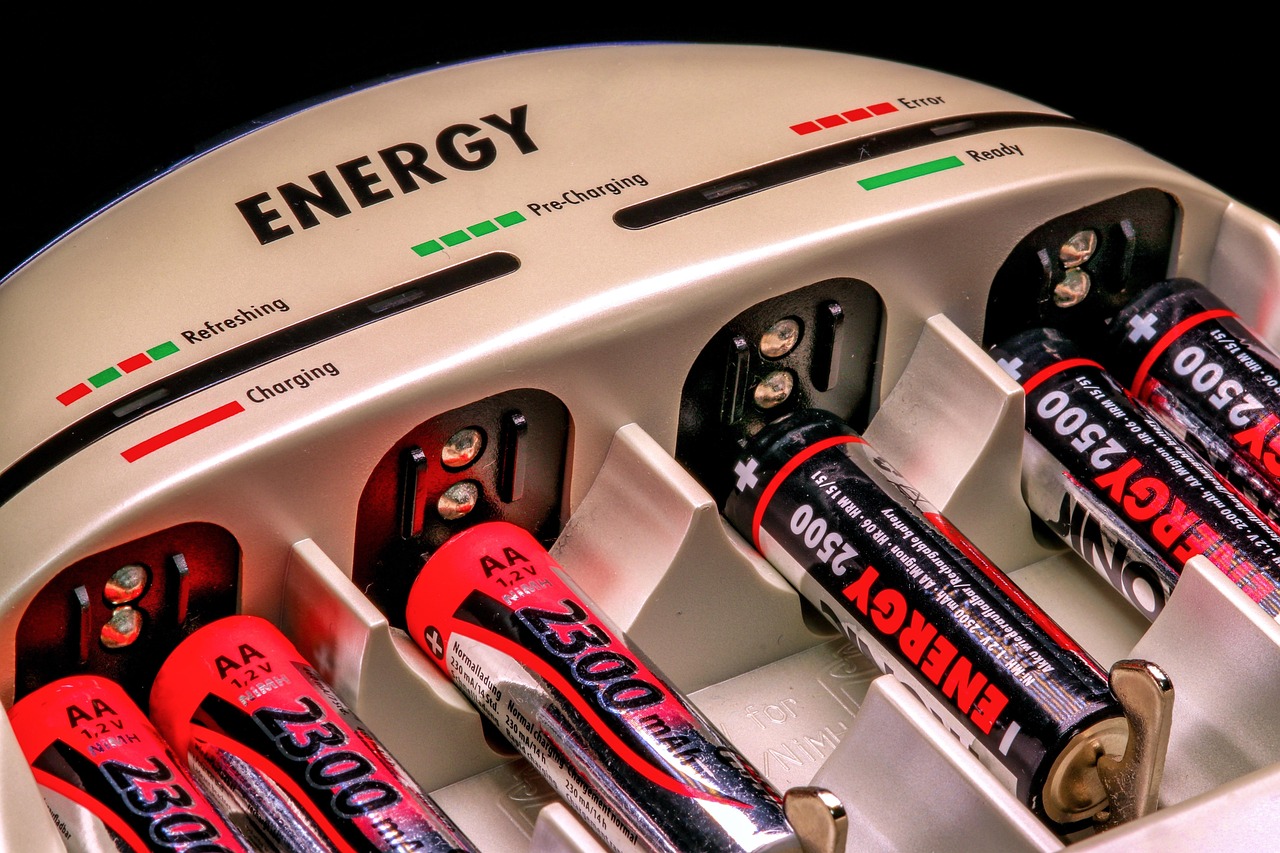
Open most people’s gear drawer and you will find a graveyard of batteries: a couple of odd 18650s from an old flashlight, three dead AAs, a headlamp cell that fits nothing else in the house, and a charger that only works with one of them. None of that is useful in an actual outage. The fix is not buying more batteries, it is buying fewer kinds of them. This guide covers how to pick one or two cell formats and build your whole kit around them, plus the specific rechargeable cells and chargers we would put in that drawer ourselves.
This is the companion piece to our flashlight buyer’s guide and our headlamp guide: those articles help you choose the lights, this one helps you keep them running once you own them.
Why standardizing your battery format matters
A flashlight, a headlamp, a lantern, and a radio that each take a different battery is four separate points of failure. You need four kinds of spares, you need to remember which charger goes with which device, and in the dark, tired, at 2 a.m., that is exactly the moment you grab the wrong cell or discover your only spare is for the device that still has half a charge anyway. Standardize two or three devices on the same cell format and the math gets simple: one style of spare, charged and rotated, covers everything. That is the entire point of this guide. It is not about buying the most batteries, it is about buying the fewest kinds.
How to choose: build the system, not just the battery
Pick one or two cell formats and commit. For most modern gear, that means 18650 or 21700 lithium-ion cells, which power the majority of serious flashlights, headlamps, and lanterns sold today. A 21700 is physically larger and holds more capacity than an 18650, but many devices are built around one or the other specifically, so check what your existing gear takes before you buy spares. If you already lean toward AA-powered gear for its resilience (see our flashlight guide’s case for a dual-fuel light), standardize there instead. The format matters less than committing to it.
Match the charger to the batteries, and make sure it runs on power you control. A charger that plugs into a USB-C cable can be fed by a wall outlet, a car adapter, a power bank, or a solar panel, which means it keeps working long after a wall outlet stops being an option. A multi-bay charger lets you top off a whole set of spares in one sitting instead of one cell at a time, which matters more than it sounds like the first time you actually need four charged cells at once.
Buy in multiples and actually rotate them. One spare is not a spare, it is a single point of failure with different packaging. Buy at least two spares per device, keep them charged, and swap them into daily use every few months so you are never relying on a cell that has sat dead in a drawer for a year. Rechargeable lithium cells lose a little capacity sitting fully charged for months at a time, so cycling them through actual use keeps them healthier and tells you early if one is starting to fail.
Buy reputable brands and protected cells. Lithium-ion cells are not the place to save two dollars on a no-name battery. A protected cell has a small circuit built in that shuts it down before it over-discharges, overheats, or gets damaged by a short, which matters a lot more once that cell is riding around in a bag or a glovebox. Stick to known brands like Nitecore and Fenix, buy from a seller that stocks genuine stock, and treat a battery that is swelling, hot to the touch, or holding a fraction of its rated capacity as trash, not as a spare.
Six picks: one format, fully covered


Affiliate note: buy through these links and ThisTracks may earn a small commission at no extra cost to you. We only list gear that is in stock and that we would carry ourselves.
Charging when the grid is down
A USB-C charger is only as useful as what you plug it into, so plan the power source, not just the charger. During a short outage, a power bank or battery station sized for your kit can run a multi-bay charger for days off a single charge. For anything longer, a foldable solar panel that feeds that same power bank turns a sunny afternoon into charged spares instead of a slowly draining stockpile. The chargers above were picked specifically because they run on USB-C: that is the plug every power bank and most solar panels already speak, so you are not hunting for a proprietary adapter when it actually matters.
Where this fits your kit
Standardizing your batteries only pays off if the devices around it match. Start with the lights: our flashlight buyer’s guide and headlamp guide both name specific models by cell format, so you can shop for gear that already fits the spares you are building. A battery-powered emergency radio is usually where the AA format earns its keep, since AA is what you can resupply almost anywhere. And every one of these cells and chargers is exactly the kind of small, high-value gear that belongs in your everyday carry and your grid-down kit alike, since the same charged spare works whether the emergency lasts an hour or a month.
Common questions
18650 or 21700, which should I standardize on?
Whichever your existing or planned gear actually uses. A 21700 is physically bigger and typically holds more capacity, so it shows up in brighter, higher-output lights. An 18650 is smaller and fits the more compact EDC-focused gear. Check the batteries your flashlight and headlamp already take before buying spares, since the two formats are not interchangeable.
Do I need a separate charger if my batteries have USB-C ports?
Not strictly, and several of the cells above charge individually over their own USB-C port. A dedicated multi-bay charger like the UMS4 earns its place once you own more than two or three spares, since charging four cells with four separate cables gets old fast, and a real charger also gives you a status check on each cell instead of guessing from a blinking light on the battery itself.
How often should I rotate my spare batteries?
Cycle them into actual use every three to four months rather than letting them sit fully charged indefinitely. Lithium-ion cells hold up better with regular use than with long storage at full charge, and rotation is also how you catch a failing cell early, before you are counting on it in the dark.
Battery and charger setup, condensed
Pick one or two cell formats, usually 18650 or 21700 for your lights and AA for resilience gear, and build your whole kit around them instead of collecting whatever came in the box. Buy a charger that runs on USB-C so it can be fed by a wall outlet, a power bank, or a solar panel, buy at least two spares per device, and rotate them into daily use so nothing sits dead in a drawer until the one night you need it. Do that, and staying powered stops being a scramble and becomes a five-minute habit.