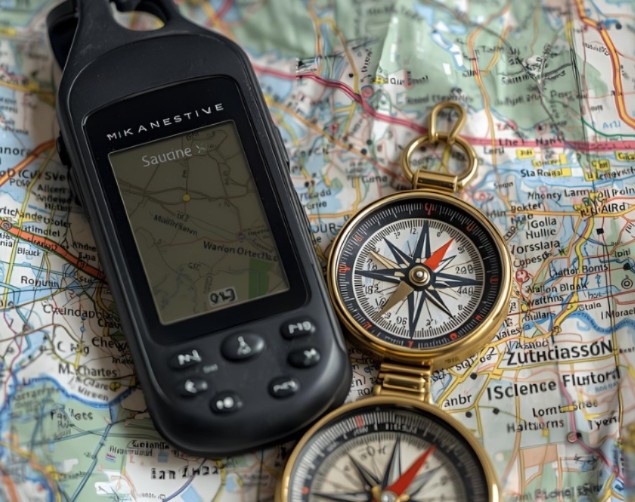
The smartphone in your pocket is one of the most powerful navigation tools ever created, capable of pinpointing your location, mapping a route, and guiding you turn by turn anywhere in the world. Add satellite messengers and specialized apps, and modern technology gives the outdoors traveler capabilities that would have seemed like magic a generation ago. But this power comes with dependence, and the traveler who understands how to use these tools well, and how to survive their failure, gets all the benefit without the fatal false confidence. This guide covers navigating with technology wisely.
The tools at your disposal
Modern navigation technology spans several tools, each with its place:
- Smartphone GPS apps. Your phone has a genuine GPS receiver that works without cell signal, and mapping apps can guide you if you have downloaded the maps in advance. This makes the device you already carry a capable navigator.
- Offline maps. The critical trick most people miss: downloading maps for offline use before you lose signal, so your navigation keeps working in the backcountry where there is no data connection.
- Dedicated GPS units, which are more rugged and longer-lasting for serious use, covered in choosing a GPS device.
- Satellite messengers and communicators, which let you send messages and summon help from far beyond cell coverage, a real safety upgrade for remote travel.
Download your maps before you leave the signal
Here is the single most important and most overlooked skill in tech navigation: your phone’s GPS works without cell service, but its maps often do not, unless you downloaded them first. Countless people have wandered into the backcountry assuming their mapping app would guide them, only to find a blank screen the moment they lost data connection. Before any trip into an area with unreliable coverage, download the offline maps for your entire route and surroundings while you still have signal. This one step transforms your phone from useless-without-bars into a genuine offline navigator. Make it a habit, part of your trip preparation, and your phone becomes a reliable tool even deep in the wilderness. Skip it, and your expensive device is just a dead-weight rectangle exactly when you need it most.
The limitations you must respect
Technology’s power is real, and so are its failure modes. Batteries die, and cold weather accelerates it dramatically, sometimes cutting a battery’s effective life by half or more in freezing conditions. Devices break, get wet, or malfunction. Signal drops in canyons and dense cover. And screens can be hard to read in bright sun or with cold, wet hands. None of this makes the technology bad; it makes total reliance on it dangerous. The traveler who treats a phone as an infallible guide is one dead battery away from being lost, while the one who treats it as a powerful but fallible tool stays safe.
The power your devices depend on

Affiliate note: buy through this link and ThisTracks may earn a small commission at no extra cost to you. We only list gear that is in stock and that we would carry ourselves.
Habits for reliable tech navigation
Get the most from technology by building good habits: download offline maps before every trip, carry a way to recharge, keep devices warm and protected from water, conserve battery by using airplane mode and dimming the screen when you can, and learn your apps thoroughly before relying on them. Mark your key locations, your vehicle, your camp, a bailout point, so you can always return to them. And cross-check what the screen tells you against the actual terrain, since technology occasionally errs and the landscape does not lie.
Extending battery life in the field
A few field habits meaningfully extend how long your devices last. Keep a phone or GPS unit in an inner jacket pocket close to your body in cold weather rather than an outer pocket or pack pocket, since body heat slows the cold-weather battery drain significantly. Enable airplane mode whenever you are not actively navigating, since a phone constantly searching for a cell signal in a no-coverage area drains its battery dramatically faster than one with radios turned off. Reduce screen brightness to the minimum usable level, and close other apps running in the background that continue consuming power even when you are only using navigation.
Redundancy is non-negotiable
For all its power, technology must never be your only navigation method, because everything electronic eventually fails. The unbreakable rule is to carry analog backups: a paper topographic map and compass and the skill to use them, plus a grasp of natural navigation for the deepest fallback. With these behind it, technology becomes a wonderful convenience whose failure is an inconvenience rather than a crisis. Without them, a dead phone becomes an emergency.
Common questions
Does airplane mode actually stop GPS from working?
No. GPS reception is a separate radio system from cellular and Wi-Fi, and most phones continue receiving GPS signals normally in airplane mode while saving significant battery by not searching for a cell signal. This makes airplane mode with GPS/location services left on one of the best simple habits for backcountry navigation.
Are dedicated GPS units genuinely more reliable than a smartphone for serious trips?
Generally yes, for extended or remote trips, since dedicated units are typically more rugged, weather-sealed, and battery-efficient than a general-purpose smartphone, and their batteries are often replaceable in the field rather than requiring a full recharge. For shorter trips with reasonable phone battery life, a well-prepared smartphone is often sufficient.
What is the minimum realistic backup if I genuinely cannot afford a separate GPS device or paper maps?
A basic compass and a general sense of the terrain’s major landmarks, learned before the trip, is far better than nothing, and inexpensive compasses cost very little. Even without a topographic map specifically, knowing the rough direction back to a road, trailhead, or water source provides a real fallback if all electronics fail.
Tech navigation, condensed
- Your phone’s GPS works without signal, but download offline maps first.
- Satellite messengers add the ability to call for help beyond cell coverage.
- Respect the limits: batteries, cold, breakage, lost signal, and glare.
- Manage power with airplane mode, body heat, and dimmed screens; mark your key locations.
- Always carry a paper map, compass, and the skills; technology is never your only tool.
Navigation technology is genuinely transformative, putting a precise, powerful guide in the pocket of anyone who carries a phone. Embrace it for what it offers, download your maps in advance, manage your power, and learn your tools, and it will serve you wonderfully. Just never forget that it is a tool, not a guarantee, and keep the analog skills and paper backups that turn its inevitable failure from a disaster into a shrug. That balance of modern power and timeless skill is what makes you truly capable of finding your way, in any condition, with or without a working screen.