The most common backup-power mistake we see is not buying too little. It is buying blind: grabbing whatever “solar generator” the algorithm served up, discovering during the first real outage that it runs the fridge for ninety minutes, and concluding that backup power is a scam. It is not a scam. It is arithmetic. Watts out, watt-hours stored, watts back in. Get those three numbers right for your household and even a modest budget buys real capability. Get them wrong and no budget saves you.
The three numbers that matter
Output (watts) is what a unit can push at once. A phone charger draws about 20W, a CPAP 30 to 60W, a chest freezer 100 to 300W with a startup surge that can triple that, a space heater 1,500W. If the device’s draw exceeds the unit’s output, it simply will not run, no matter how big the battery is.
Capacity (watt-hours) is how long it can push. A 300Wh unit runs a 60W load for roughly five hours in theory, closer to four in practice after conversion losses. A phone needs about 15Wh per full charge, so that same 300Wh unit is also twenty phone charges. Capacity is the number marketing likes to hide behind milliamp-hours; multiply mAh by voltage (usually 3.7V) and divide by 1,000 to get honest watt-hours.
Recharge (watts in) is the number everyone forgets. In a multi-day outage, a battery you cannot refill is a countdown timer. Wall charging is irrelevant when the wall is dead, so what matters is solar input, and panel ratings are best-case: a “100W” briefcase panel in November overcast delivers 20 to 30W. Plan on winter sun, not the box photo.
The four tiers of backup power
| Tier | Typical size | What it honestly runs | Rough cost |
|---|---|---|---|
| Pocket power bank | 10-40Wh | Phones, headlamps, earbuds; 2-8 phone charges | $20-$80 |
| Large battery bank | 40-100Wh | Phones for the family, tablets, rechargeable batteries, small fans | $40-$120 |
| Portable power station | 250-1,000Wh | CPAP overnight, laptop for days, fridge in bursts, lights and comms indefinitely with solar | $200-$900 |
| Home backup system | 2,000Wh+ | Fridge continuously, well pump, furnace blower; approaches whole-home with panels | $1,500-$5,000+ |
Our standing advice: build tiers one and two before you even price tier three. In the outages that actually happen, the thing that hurts first is dead phones, dead flashlights, and no news, and a $60 solution covers all three. We walked through what a full grid-down event demands in our guide to surviving a long-term power grid failure; the short version is that communication and light are the first battles, and they are cheap to win.
Chemistry matters more than the brand
Two batteries the same size can age very differently. Standard lithium-ion (NMC) cells are lighter and cheaper but are typically rated for 500 to 800 full charge cycles. LiFePO4 (lithium iron phosphate) cells are heavier but rated for 2,500 to 3,500 cycles and tolerate heat better. For a power station you hope to still own in ten years, LiFePO4 is worth the weight penalty. For a pocket bank you will replace anyway, standard lithium is fine. Either way, store units at 50 to 80 percent charge and top them up every three months; a battery bank forgotten in a drawer for two years is a paperweight with a good story.
What we actually recommend first
A solar-capable power bank is the single best first purchase in this category, because it covers the highest-probability need (phones, light, small electronics) and it recharges itself. Panels folded into a compact bank will never match a briefcase panel, but they turn a dead battery into a working one over a sunny day, and that changes the math of a week-long outage.
The self-refilling option

Affiliate note: buy through this link and ThisTracks may earn a small commission at no extra cost to you. We only list gear that is in stock and that we would carry ourselves.
Do not forget the small-battery layer
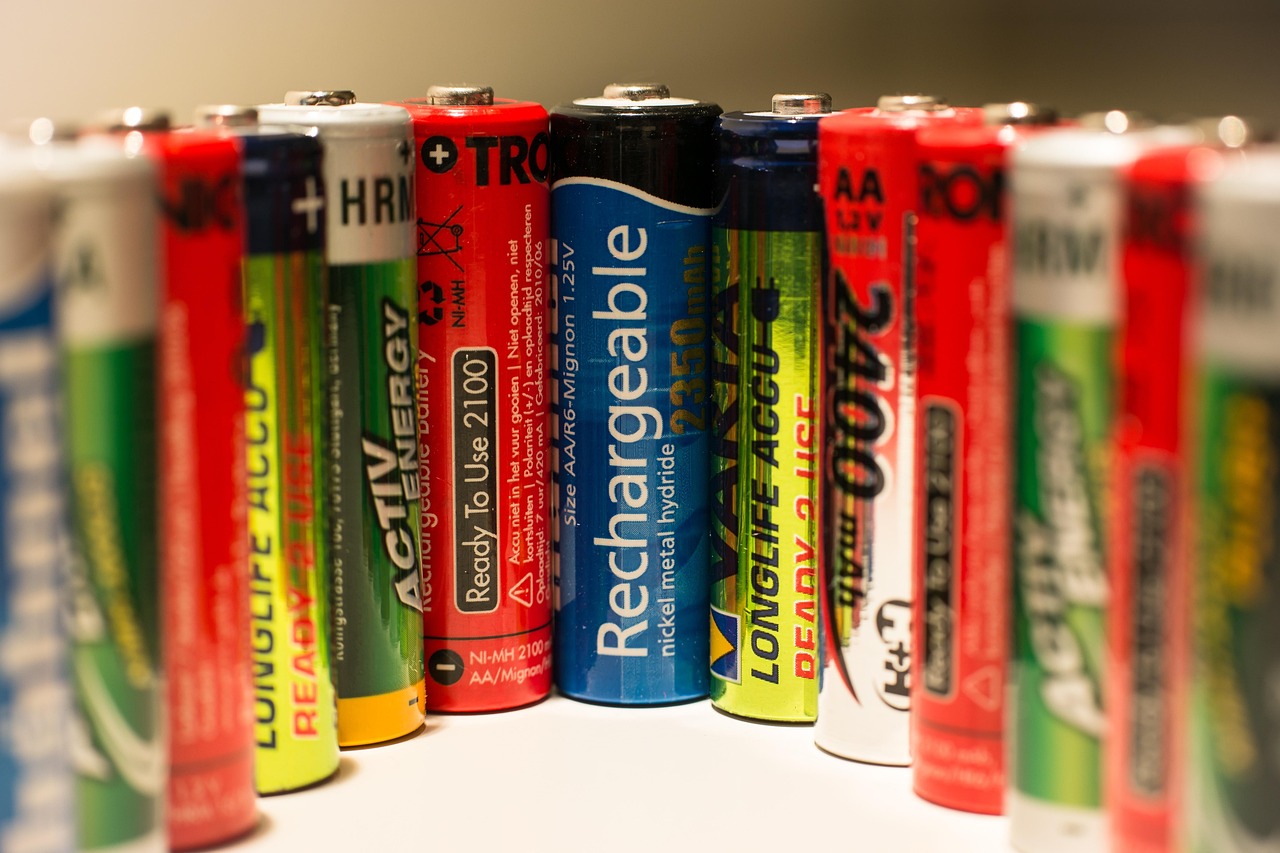
Half the gear in a prepared house runs on AA cells: headlamps, lanterns, weather radios, kids’ devices that keep the peace. Disposable alkalines leak, expire, and vanish when a storm is named. USB-rechargeable AAs flip that dependency: any USB source, including the solar bank above or a car port, becomes your battery factory. Pair them with a multi-port charger so one outlet ahead of a storm tops the whole family’s devices at once instead of rationing a single socket.
USB power banks worth owning


Affiliate note: buy through these links and ThisTracks may earn a small commission at no extra cost to you. We only list gear that is in stock and that we would carry ourselves.
The refillable battery layer


Affiliate note: buy through this link and ThisTracks may earn a small commission at no extra cost to you. We only list gear that is in stock and that we would carry ourselves.
Stepping up to a power station
When you are ready for tier three, shop on the three numbers, not the marketing name. Work out your real loads first: walk the house and list what must run in an outage, with its wattage off the label or a $15 kill-a-watt meter. A realistic small-household outage load (fridge in bursts, CPAP, phones, a lamp, a radio) averages 40 to 80W, which a 500 to 1,000Wh station with a genuine 100W of panel input sustains more or less indefinitely in decent sun. Buy the panels at the same time as the station; input ports and connectors are not standardized, and “I’ll add solar later” is how people end up with the countdown timer. If you are building toward energy independence rather than outage coverage, that is a different project with different economics, and we covered it in solar power DIY kits for off-grid living.
Two placements worth planning: your bug-out bag’s power and communications layer should draw from the pocket tier, not the station (weight decides), and in winter, remember that batteries hate the cold: capacity drops noticeably below freezing, so stations live indoors, and the tactics in our winter storm survival guide assume your power lives where you do.
FAQ
Can a power station run a space heater? Technically some can, briefly. A 1,500W heater empties a 1,000Wh station in about 40 minutes. Electric resistance heat is the worst possible use of stored battery power; solve warmth with insulation, sleeping bags, and safe combustion heat instead.
Do I need EMP protection for this gear? The threat is widely misunderstood and the mitigation is cheap if you want it; see our level-headed take in EMP and Faraday protection. For the storms and grid failures that actually occur, no.
Gas generator or battery station? Different tools. Generators deliver far more watts per dollar but need fuel, maintenance, and outdoor operation (carbon monoxide kills people every single outage season). Batteries are silent, indoor-safe, and maintenance-free. Many prepared households eventually run both: generator for the big loads a few hours a day, battery station carrying the quiet loads around the clock.
Backup power, condensed
- Three numbers decide everything: watts out, watt-hours stored, watts back in.
- Build the cheap tiers first: pocket bank and rechargeable AAs beat an unbought power station.
- In multi-day outages, recharge rate is king; buy solar input with the battery, not later.
- Prefer LiFePO4 chemistry for long-service units; store everything at 50-80 percent and top up quarterly.
- Never spend battery power on resistance heat, and never run a generator indoors.
Backup power is one of the few areas of preparedness where money translates directly into capability, but only after the arithmetic. Count your watts, buy your tier, keep it charged. The households that ride out a week-long outage comfortably are rarely the ones with the most expensive unit; they are the ones whose unit was sized for their actual loads and was full when the lights went out.
Last updated: July 18, 2026