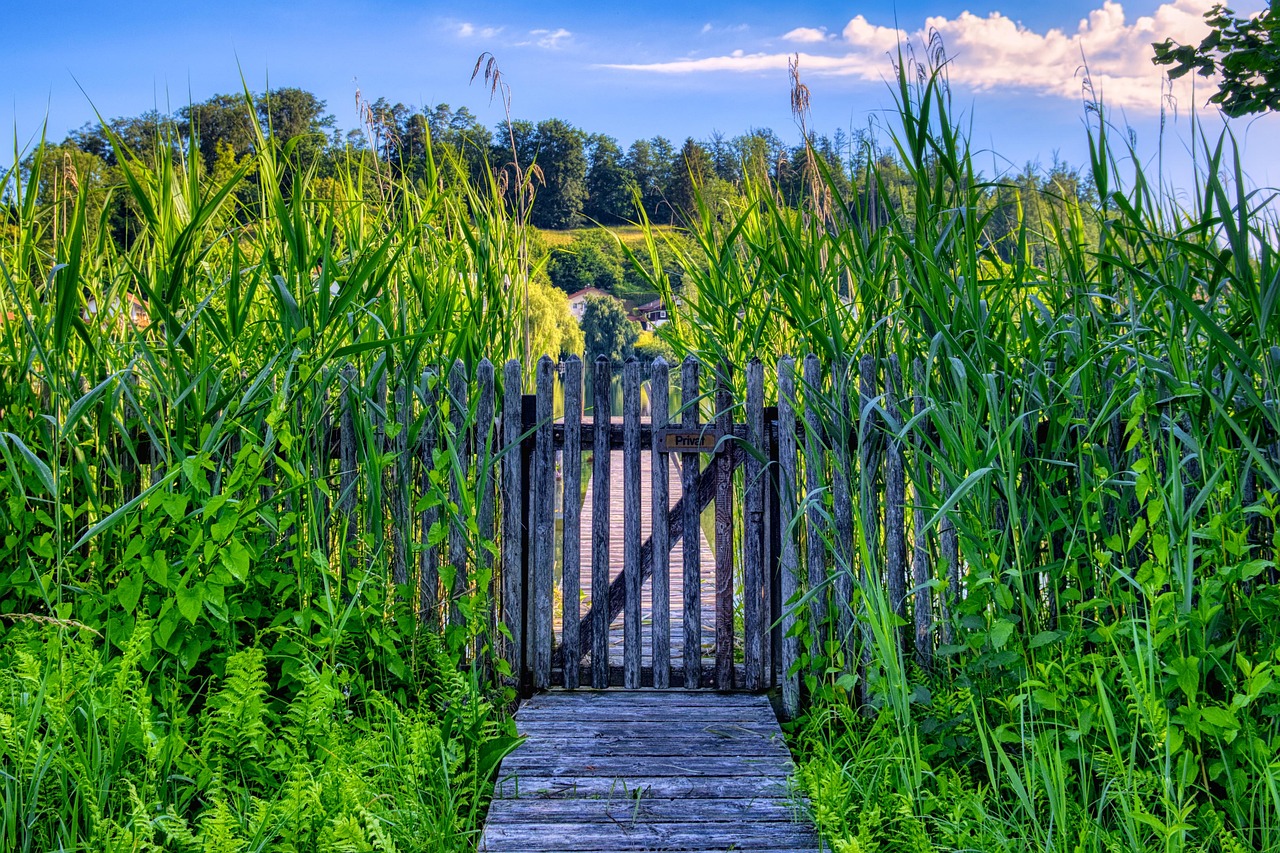
Long before an intruder reaches your door, they encounter the edge of your property, and what they find there shapes whether they proceed or move on. Fences, gates, and physical barriers form the outermost layer of home security, the perimeter that deters, delays, and defines your space. Well-designed perimeter security discourages casual trespassers, slows determined ones, and signals clearly that your property is protected and cared for. This guide covers how to use fences, gates, landscaping, and barriers to secure the edge of your property as the first line of a layered defense.
What perimeter barriers actually do
Perimeter security serves the deter and delay functions of a layered plan. A visible boundary tells would-be intruders that this property is defined, watched, and not an easy or anonymous target, which turns away the opportunists who make up most trespassers. And any barrier that must be climbed, opened, or gone around adds time and effort, slowing a determined intruder and increasing the chance they give up or are noticed. A perimeter does not need to be impenetrable to be effective; it needs to make entry inconvenient and conspicuous enough that easier targets look more appealing.
Choosing fencing for your goals
Different fences serve different purposes, so choose based on what you actually want to achieve:
| Fence type | Strength | Trade-off |
|---|---|---|
| Open (chain-link, split-rail) | Visibility aids detection by you and neighbors | Offers less physical delay and no concealment |
| Solid privacy fence | Blocks outside view of your property | Can hide an intruder once they are inside it |
| Tall, hard-to-climb | Meaningful delay against a determined intruder | Often limited by local height ordinances |
| Decorative / low | Defines the boundary clearly, low cost | Minimal physical delay on its own |
- Visibility versus privacy. An open fence lets you and neighbors see activity, aiding detection, while a solid privacy fence blocks views into your property but can also give an intruder concealment once inside. Consider the trade-off for your situation.
- Height and difficulty. A taller, harder-to-climb fence delays more, though local rules often limit height, so check your local regulations.
- Durability and maintenance, matched to your climate and how much upkeep you want.
- Appearance, since a well-kept fence signals an occupied, cared-for property, itself a deterrent, while a neglected one suggests the opposite.
Gates: the controlled opening
A fence is only as strong as its gates, which are the deliberate openings in your perimeter and therefore the points that need the most attention. A secure gate with a good lock controls access at the entrance, while a flimsy or unlocked gate undermines the entire fence. For driveways, gates control vehicle access and add a significant obstacle. Ensure every gate is as secure as the fence it interrupts, with quality latches and locks, because an intruder will always probe the gate first as the path of least resistance.
Landscaping is a security tool
Your plantings and yard design are a quiet, effective, and often overlooked part of perimeter security. Thorny or dense shrubs planted beneath ground-floor windows and along vulnerable boundaries create natural barriers that are genuinely unpleasant to push through, deterring access to exactly the points intruders target. At the same time, keeping trees and large shrubs trimmed removes the concealment that intruders rely on, ensuring that anyone approaching is visible rather than hidden, which supports both deterrence and detection. Avoid creating blind spots and hiding places near entry points with overgrown vegetation. Thoughtful landscaping, defensive plantings where you want barriers and open sightlines where you want visibility, turns your yard itself into a security layer that works around the clock at no ongoing cost. It is one of the most elegant security measures because it protects while simply looking like a well-kept garden.
Layer the perimeter with detection and lighting
Physical barriers work best combined with the other security layers. Good exterior and motion-activated lighting along the perimeter removes darkness and startles intruders, while cameras and sensors at the boundary provide early detection. A perimeter that is fenced, gated, well-lit, thoughtfully landscaped, and monitored deters and detects far more effectively than any single measure alone, forming a strong outer layer of your overall home security plan.
Perimeter security for the homestead
On a larger property or homestead, perimeter security takes on added importance and scale, protecting not just the home but outbuildings, equipment, livestock, and land. The same principles apply, deter, delay, define, and observe, extended across a bigger boundary, and they connect to the broader task of protecting your homestead from theft. Whatever the size of the property, a secure perimeter is the foundation that the inner layers of security build upon.
Budgeting a perimeter project realistically
Perimeter upgrades range enormously in cost, and it is worth sequencing them rather than attempting everything at once. Defensive landscaping and trimming existing overgrowth cost little beyond labor and are a genuinely high-value starting point. Gate hardware upgrades, a quality lock and latch, are a moderate, affordable next step. A full fence replacement or addition is typically the largest expense and is worth planning around actual quotes from local contractors rather than national averages, since material and labor costs vary widely by region. Starting with the cheapest, highest-impact steps, landscaping and gate security, lets a household improve its perimeter meaningfully before committing to the cost of new fencing.
Common questions
Does a fence actually reduce crime, or is that more of a feeling of security?
Both physical delay and the psychological deterrence of a defined, watched-looking property play a real role. Most residential intrusions are opportunistic rather than determined, and opportunists specifically favor targets that look easy and unwatched, which is exactly what a well-maintained, visibly defined perimeter signals against.
What is the single most commonly overlooked weak point in a home perimeter?
Side and rear gates, more often than the front. Homeowners frequently invest in a solid front fence and gate while leaving a side gate with a simple latch anyone could reach over, which defeats the purpose of the stronger front barrier entirely. Walk your full perimeter, not just the street-facing side, when assessing weak points.
Are decorative low fences worth installing if they clearly will not stop a determined intruder?
Yes, for the boundary-definition and casual-deterrence value even without meaningful physical delay. A clearly defined property line communicates “this is private, monitored space” to the large majority of trespassers, who are opportunistic rather than determined, even if a low fence would not slow down a genuinely motivated intruder.
Fences and barriers, condensed
- The perimeter deters opportunists and delays determined intruders.
- Choose fencing for your goals: visibility versus privacy, height, durability, appearance.
- Secure every gate as strongly as the fence; gates, especially side and rear ones, are probed first.
- Use defensive landscaping for barriers and open sightlines for visibility.
- Combine barriers with lighting and detection for a strong outer layer.
The edge of your property is where security begins, and a thoughtfully designed perimeter of fences, secure gates, and defensive landscaping does much of the work of keeping trouble away before it ever nears your home. It deters the opportunists, delays the determined, and defines your space as protected and watched. Combined with lighting and detection and integrated into a layered plan, a secure perimeter forms the strong first line of a home defense built on prevention, making your property the well-guarded, uninviting target that intruders pass by in favor of somewhere easier.