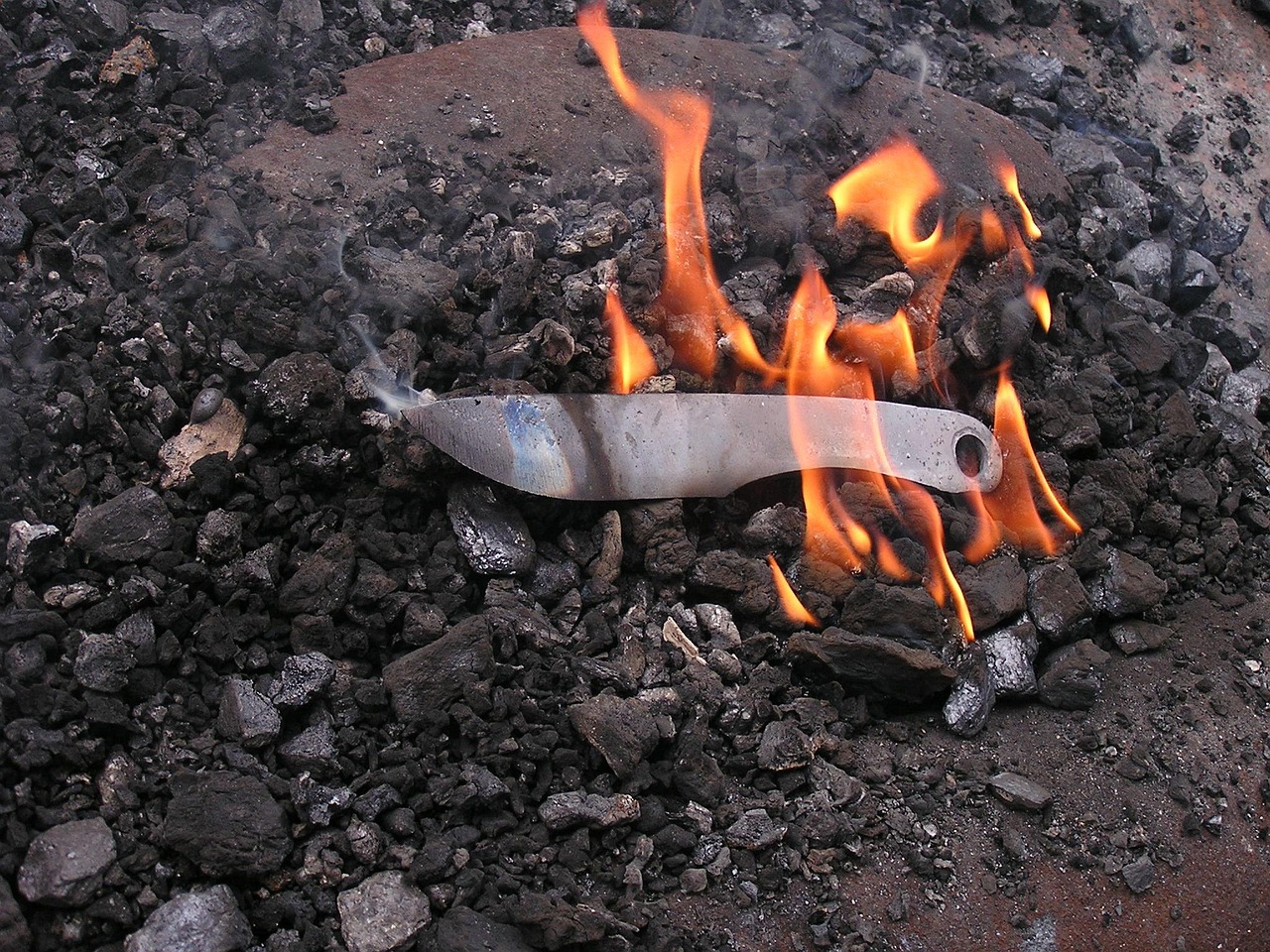
Once you understand the basics of fire, a deeper world opens up: the friction and spark methods that let you make fire with almost nothing, the way humans did for millennia. These are advanced skills, genuinely difficult, and worth learning precisely because they are the last line when every modern tool is gone. This is not casual reading; it is a working introduction to the techniques that reward serious practice with a capability few people possess: the ability to create fire from wood, stone, and patience alone.
The bow drill: the most learnable friction fire
Of all the friction methods, the bow drill is the one most people can actually master, because the bow does the fast spinning that bare hands cannot sustain. It has four parts working together:
- The spindle, a straight, dry rod of softwood spun rapidly against the fireboard.
- The fireboard, a flat piece of the same dry softwood with a notch where the spindle grinds.
- The bow, a curved branch strung with cordage, looped once around the spindle, that spins it back and forth.
- The bearing block, a stone or hardwood held on top of the spindle to press down without friction.
You saw the bow back and forth to spin the spindle, pressing down with the bearing block. The friction grinds hot black dust into the notch, and with enough speed and pressure that dust ignites into a glowing coal. That coal goes into your tinder bundle and is breathed to flame. The technique lives in the details: matched dry softwoods, a properly cut notch, steady downward pressure, and long smooth bow strokes. It takes real practice to get your first coal, which is exactly why you learn it at home, not in a crisis.
The wood matters more than your effort
Beginners fail at friction fire mostly because of wood choice, not weakness. Both the spindle and fireboard must be the same relatively soft, bone-dry wood, cedar, cottonwood root, willow, basswood, and similar. Green wood will not work. Damp wood will not work. Hardwoods are too dense and just polish instead of grinding dust. If your setup produces smoke but no coal, the problem is almost always wood that is too hard, too wet, or mismatched, not your technique. Get the materials right and even modest effort produces a coal; get them wrong and you can saw all day for nothing. Learn to identify the right woods in your area, and half the battle is already won.
The hand drill and flint and steel
Two other classic methods extend your options. The hand drill uses the same friction principle but spins the spindle between your bare palms, no bow required. It is simpler in equipment and much harder in practice, demanding conditioned hands and near-perfect materials, and it excels in dry climates. Flint and steel works differently, striking a hard stone against high-carbon steel to shower sparks onto char cloth, a piece of charred cotton that catches a spark and holds a coal. Making char cloth in advance, by charring cloth in a closed tin over a fire, gives you a nearly foolproof spark-catcher for this method.
Modern tools that never fail you
Learning friction fire builds deep skill and self-reliance, but there is wisdom in carrying tools that make fire trivial so the primitive methods stay a backup rather than a nightly ordeal. A rechargeable arc lighter works in wind and produces no flame to blow out, and a magnesium rod throws sparks even soaked.
Modern fire that works when it counts


Affiliate note: buy through these links and ThisTracks may earn a small commission at no extra cost to you. We only list gear that is in stock and that we would carry ourselves.
Build on the fundamentals
These advanced methods assume you already have the fundamentals of tinder, kindling, and coal transfer down, so start with primitive fire starting if you have not. As with all bushcraft, the skill is only real once your hands have done it many times, so practice the bow drill repeatedly on dry days until a coal is routine rather than a miracle. That mastery, combined with reliable modern tools carried as backup, means fire is something you can always summon, in any season and any condition.
Advanced fire, condensed
- The bow drill is the most learnable friction method; the bow sustains the spin.
- Wood choice decides success: matched, soft, bone-dry woods only.
- The hand drill needs no bow but far more skill; flint and steel needs char cloth.
- Make char cloth in advance as a near-foolproof spark-catcher.
- Carry an arc lighter and spark rod so primitive fire stays a backup.
Making fire by friction is one of the most primal and satisfying skills a person can learn, a direct link to every human who came before us. It is also hard, and mastering it takes patience and many attempts. Put in that practice on calm days, learn the woods of your region, and keep reliable modern tools in your pack, and you will hold the full spectrum of fire skill, from the flick of a lighter to a coal born of nothing but wood and will.