Walk into any prepping store or scroll any gear site and you will drown in options. Everything is presented as essential, which is exactly how people end up spending hundreds of dollars and still missing the things that actually keep a family alive. The skill that cuts through the noise is prioritization: knowing, in order, what your family truly needs first, second, and third. Get the order right and a modest budget outperforms a huge one spent randomly, because the cheapest items on the list are also the ones that save the most lives.
Priority follows the body, not the marketing
The correct order is not a matter of opinion. It follows the order in which a lack of something will actually hurt you, the same logic as the Rule of Threes: roughly three minutes without air, three hours without shelter in harsh conditions, three days without water, three weeks without food. Buy from the top of this list down, and do not skip ahead because a lower item is more exciting.
| # | Priority | What it means in practice |
|---|---|---|
| 1 | Water | Stored water plus a way to make more, about 1 gallon/person/day |
| 2 | Food | Two weeks of shelf-stable food your family already eats |
| 3 | Warmth and shelter | Blankets, layers, a safe way to hold heat without a flame indoors |
| 4 | Light and fire | A light per person and a reliable, redundant way to make fire |
| 5 | First aid | A stocked kit plus a buffer of daily medications |
| 6 | Sanitation | A plan for waste and hygiene when the water is off |
| 7 | Communication | A way to hear official news and reach family |
| 8 | Tools, cash, documents | Multi-tool, small bills, copies of key papers |
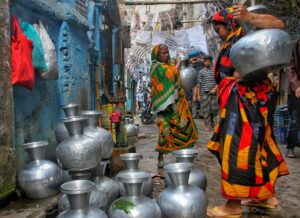
Water sits at the top for a physiological reason that no amount of marketing can override: a healthy adult can survive weeks without food but only about three days without water, and that number drops fast in heat or with any physical exertion. Everything below it on the list matters, but nothing below it matters if this rung is empty.
The essentials, gathered in one place
Notice how cheap and unglamorous the top of that list is. The items that matter most are also among the least expensive, which is the opposite of what marketing implies. Here are a few that sit right at the top tiers and earn their place many times over.
Top-tier essentials


Affiliate note: buy through these links and ThisTracks may earn a small commission at no extra cost to you. We only list gear that is in stock and that we would carry ourselves.
The one-question filter for any purchase
Before buying any survival item, ask: which rung does this serve, and have I filled the rungs above it? A thousand-dollar generator serves light and power, which is far down the list. If your family has no stored water, no gathered first aid, and no plan, that generator is a want dressed up as a need. This single question will save you more money and keep you safer than any gear review, because it forces every dollar to the top of the list before it drifts to the bottom.
Tailor the list to your family
The order above is universal, but the specifics are yours. An infant needs formula and diapers near the very top. Someone on daily medication treats that as essential as water, and a two-week buffer of a medication that cannot be delayed even a day belongs at priority one alongside water, not down at five. A person in a cold climate weights warmth more heavily than someone in the desert, who weights water even higher and may need closer to two gallons per person per day in summer heat. Build the standard priority ladder, then adjust for the actual humans in your home. Fold the result into your home kit so the essentials live together, ready to grab.
Applying the list on a real budget
If you are starting from zero, do not try to fill every rung at once. Spend a set amount, say fifty or a hundred dollars, entirely on rung one until it is genuinely done, then move to rung two. This is the opposite of how most people shop, which is buying a little of everything and ending up with a house full of half-measures. A family with two weeks of stored water and nothing else is safer than a family with a little water, a little food, a little light, and a little of everything else, because the first family has actually solved one real problem instead of touching six unsolved ones.
The mistake of buying by category instead of by rung
A subtle trap: people often shop by category (I need “food stuff,” I need “camping gear”) rather than by rung, and end up with a pile of items that all serve the same priority level while lower rungs sit empty. A family can easily own three different flashlights, all serving rung four, while owning zero stored water at rung one. The fix is to physically separate your shopping list by rung before you go anywhere near a store or a website, and refuse to buy a second item for a rung that already has a working first item until every rung above your current budget ceiling is genuinely covered.
Common questions
What if I can only afford one item this month?
Buy water storage or purification. It is the cheapest item on the list relative to how quickly its absence becomes dangerous, and it is the one thing every other rung assumes you already have.
Does this order change for a two-week disaster versus a two-day one?
No, the order stays the same either way. What changes is quantity: a two-day event needs a few gallons of water per person, while two weeks needs closer to fourteen gallons per person. Buy the same priorities, just scaled to how long you realistically expect to be on your own.
Where do pets fit on this ladder?
Alongside their owner at every rung. A pet needs its own water, its own food, and often its own first aid supplies, and those needs should be built into the same priority order rather than treated as an afterthought once the humans are covered. Our guide to pet emergency preparedness covers this in full.
Prioritizing, condensed
- Buy top-down: water, food, warmth, light, first aid, sanitation, communication, tools.
- The most important items are usually the cheapest. Marketing says otherwise.
- For every purchase, ask which rung it serves and whether the rungs above are filled.
- Spend a fixed budget on one rung at a time rather than spreading thin across all of them.
- Adjust the universal ladder for infants, medications, pets, and your climate.
Prioritization is the quiet superpower of preparedness. It is not about having the most gear. It is about having the right gear, in the right order, so that whatever you have managed to buy so far is already covering the things most likely to save your family.