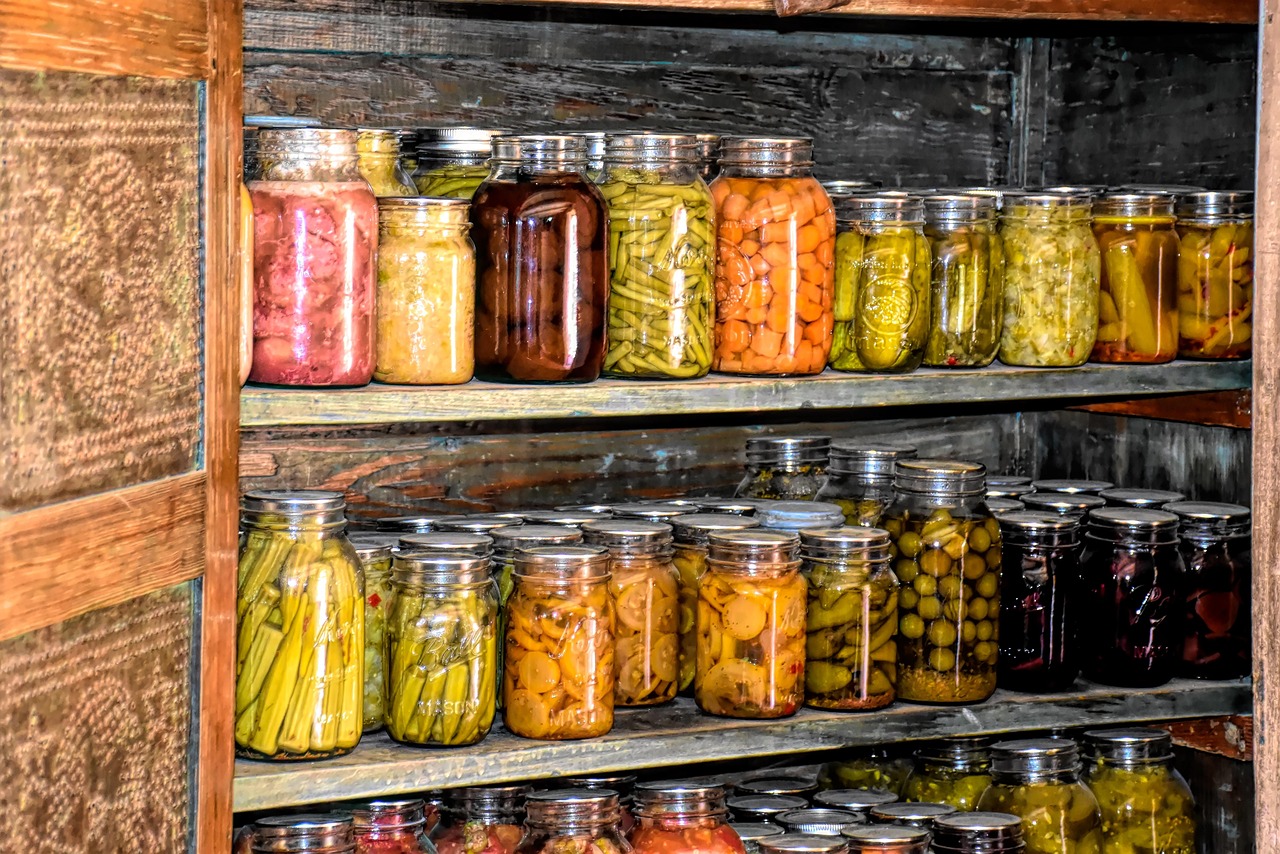
Most people who keep a stocked pantry have never answered the question that matters: if the grocery trips stopped tomorrow, how many days would that pantry cover? Not a guess, a number. It turns out most households either badly overestimate (a full-looking cabinet can be gone in four days) or never find out until they need to. The fix is not more shelves, it is a simple count: total calories on hand, divided by what your household eats in a day.
The math is simpler than it looks
Days of food equals total stored calories divided by household size times 2,000 calories a day. That “2,000” is a rough per-person planning number, not a nutrition target, and it is the same shortcut dietitians and disaster-planning agencies use for exactly this reason: it is good enough to plan around without demanding a spreadsheet. Water works the same way but simpler, since it is just gallons on hand divided by household size, at roughly one gallon per person per day for drinking and basic cooking, a figure that comes from CDC and FEMA emergency planning guidance.
Two numbers, one for food and one for water, and suddenly “we’re pretty well stocked” turns into “we have eleven days of food and four days of water.” That second number is usually the one that surprises people, because water is heavy and bulky and easy to under-buy relative to how confident a full pantry shelf makes you feel. A single case of bottled water, the kind most people grab at the store, holds about three gallons total, which covers one person for three days, not a family for a week.
Water is almost always the weak link
A shelf of canned goods can quietly represent three weeks of calories. The same closet rarely holds three weeks of water, because a gallon a day per person adds up to real weight and real space fast, roughly eight pounds per person per day. If you have not checked your water number specifically, do it before anything else on this page. Food stretches; thirst does not negotiate.
The count that most people skip: rotation
A days-of-supply number means nothing if the food behind it has expired. The classic prepper answer here is FIFO, first in, first out: new purchases go to the back of the shelf, older stock moves to the front and gets used first, and nothing sits forgotten until it is a science project. That is a rotation habit, not a purge. The moment something is nearing its use-by window, the right move is to cook it into this week’s dinner, not throw it out. A pantry that gets eaten from and refilled is a working pantry; one that only grows is a pile that quietly expires.
This is also where knowing your actual inventory pays off twice: once for the days-of-supply number, and again for catching the can in the back that expired eight months ago before it becomes waste instead of a meal.
How the numbers change by household
The 2,000-calorie shortcut works fine for a rough household average, but a few adjustments are worth making. Growing teenagers and physically active adults often need closer to 2,400 to 2,800 calories a day, while young children need less, often 1,200 to 1,800 depending on age. If your household skews toward one end, adjust your divisor accordingly rather than assuming a flat 2,000 across everyone, or your days-of-supply number will be optimistic. The same logic applies to water in hot climates or for anyone doing physical labor during a disaster, cleanup work for example, where needs can run well above one gallon a day.
| Household situation | Adjustment |
|---|---|
| Teenagers or very active adults | Plan closer to 2,400-2,800 cal/person/day |
| Young children | Plan closer to 1,200-1,800 cal/person/day |
| Hot climate or physical labor expected | Increase water to 1.5-2 gal/person/day |
| Nursing parent | Add roughly 300-500 extra calories/day |
A free tool that does the counting for you
We built ThisTracks Your Pantry to answer this question without a spreadsheet. Add what is on your shelves, category by category, water / staples / canned / dry goods / freeze-dried / meds / fuel / batteries, and it keeps a running “days your food could last” score plus a separate water-days number, both updating as you add or use items. It also runs its own expiry radar: anything expired or due within 90 days gets flagged for rotation, framed as “cook this soon,” never “throw this away.”
Everything stays on your own device. ThisTracks Your Pantry has no account, no login, and no server storing your list, all the data lives in your browser (export a backup file any time you want a copy). It also has a print view for a physical inventory sheet to tape inside the cabinet door, which is still the fastest way to check stock standing in the kitchen with your hands full.
What a healthy target looks like
There is no single right answer, but common benchmarks used by emergency planners give a useful ladder to climb: 72 hours (three days) is the bare federal minimum most agencies recommend as a floor for every household, two weeks is a solid, achievable target for most families and covers the vast majority of realistic outages, and 30 days is where many longtime preppers land as a comfortable cushion against a severe, prolonged disruption. You do not need to jump straight to 30 days. Hit 72 hours first, then two weeks, then decide if a deeper cushion makes sense for your situation and budget.
Common questions
Does canned food last as long as the date suggests?
Often longer. Commercially canned food is frequently safe well past its printed date as long as the can is not bulging, rusted through, or leaking, though quality (taste and texture) does slowly decline. Treat the printed date as a quality guideline more than a hard safety cutoff for canned goods specifically, while still respecting expiration dates on anything perishable or previously opened.
What is the fastest way to find my current days-of-supply number?
Pull everything off the shelves once, sort it into water and food, and either total the calories by hand from labels or use a tool like ThisTracks Your Pantry to do the addition for you. Most households can complete a first full count in under an hour.
Should I count restaurant meals or freezer food in my number?
Only count what survives your specific disaster scenario. Freezer food is fine for a short outage but becomes a loss after about 24 to 48 hours without power unless you have a generator, so it should not count toward a two-week number unless your plan specifically accounts for keeping the freezer running.
Pantry days, condensed
- Days of food = total calories on hand ÷ (household size × 2,000).
- Days of water = total gallons on hand ÷ household size, at ~1 gal/person/day.
- Water is usually the tighter number. Check it first.
- Adjust the per-person numbers for teens, kids, climate, and activity level.
- Rotate with FIFO: oldest to the front, cook it before it expires, refill behind it.
- ThisTracks Your Pantry tracks all of this for you, free, with your data staying on your own device.
You do not need a bunker’s worth of buckets to be meaningfully prepared, you need to know what you have. Ten minutes with an inventory, and “I think we’re okay” becomes a real number you can act on, whether that means restocking water this week or just relaxing because the pantry is doing its job.