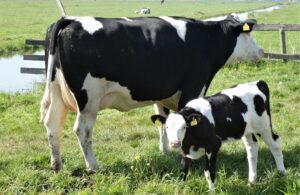
Start with the honest version, because most of what you will read about beef this month is written to frighten you. There is no beef shortage at the American grocery store. The cases are full. What has happened is that the price of what is in them has climbed past the point where a lot of households quietly stopped buying it, and the structure underneath that price is now changing in a way that will outlast the current headlines. That structural change is the real story, and it is the one worth planning around. A price spike is something you wait out. A capacity change is something you adapt to.
The numbers, plainly
The American cattle herd stood at roughly 86.2 million head in January 2026. That is the smallest it has been since 1951, which means the last time this country had this few cattle, Harry Truman was president. The 2026 calf crop is projected to fall about another two percent from what was already a multi-decade low. Fewer calves born this year means fewer finished cattle two years from now, so the low point in supply is still ahead of us rather than behind us.
Retail prices followed. Ground beef averaged about $6.89 a pound in July 2026 according to Bureau of Labor Statistics data, after setting a record near $6.70 in the spring. The USDA’s Economic Research Service projected retail beef and veal prices would rise a little over ten percent across the year. For a household that eats beef twice a week, that is not a rounding error. It is a few hundred dollars a year that has to come from somewhere else in the budget.
Why this is not a normal cattle cycle
Cattle move in cycles, and preppers who have watched a few of them tend to assume this one will resolve the way the others did. High prices make ranching profitable. Profitable ranchers hold back heifers instead of selling them. Those heifers become mother cows, the herd rebuilds over three or four years, supply returns, prices fall. That cycle is real, and the first signs of it are actually visible right now: replacement heifer inventory was up about 2.7 percent, the first meaningful sign of retention in nearly a decade. USDA projections do not show a year-over-year increase in the beef cow herd until January 2027.
Here is what makes this cycle different. While the herd shrinks, the industry is permanently removing the machinery that turns cattle into meat. Tyson Foods closed its Lexington, Nebraska plant in January 2026, taking out a facility that employed 3,200 people and processed close to 5,000 cattle a day. On August 13 the company announced it was closing plants in Joslin, Illinois and Eagle Mountain, Utah, and was seeking a buyer for its Pasco, Washington facility. Joslin alone employed more than 2,000 people and could handle roughly 3,100 head a day. Tyson is consolidating its beef business onto three plants: Dakota City in Nebraska, Holcomb in Kansas, and Amarillo in Texas.
Analysts at Stephens Inc. put a number on the total. They estimate Tyson has cut its slaughter capacity by roughly fifty percent since it announced the Lexington closure. Half. That is not a company trimming at the edges, that is a company rebuilding itself around a smaller industry, and it is doing so because the economics forced it: Tyson’s beef segment posted a $142 million adjusted operating loss in a single recent quarter, with volumes down about sixteen percent, and the company widened its full-year beef loss guidance to somewhere between $500 and $650 million.
The part almost nobody is saying out loud
Cattle can be rebuilt. A cow is a renewable asset, and given four or five good years and decent forage, ranchers will produce more of them. A processing plant is not renewable in the same way. When a plant with 3,000 head of daily capacity closes, the building gets repurposed, the skilled workforce disperses to other jobs and other towns, and the regulatory and capital cost of building a replacement is enormous. Nobody constructs a new large beef plant on the hope that the herd comes back.
That creates a genuinely uncomfortable feedback loop, and it is the single most important thing in this article. Fewer packers means fewer buyers bidding against each other for finished cattle. Fewer bidders means softer prices at the sale barn. Softer prices at the sale barn are exactly the signal that tells a rancher not to hold back heifers and rebuild. The capacity cuts that are a rational response to a cattle shortage are also, quietly, one of the forces that prolongs it.
What this means for you is straightforward. Do not plan on beef getting cheap again in 2027 because the herd turns a corner. Plan on a multi-year plateau at prices that are high by historical standards, with the retail supply chain running through fewer and larger chokepoints than it did five years ago. That second half matters as much as the first. A supply chain with three big plants instead of six is a supply chain where one fire, one cyber incident, or one labor dispute moves the national number. We covered that general pattern in our guide to preparing for supply chain disruptions and shortages, and beef is now a textbook example of it.
The response is not stockpiling. It is changing where you buy.
The reflex when food gets expensive is to buy more of it and put it somewhere. That is usually the wrong first move, because it treats a permanent price change as a temporary one. The better move is to change the channel you buy through, because the retail grocery counter is the single most expensive way to acquire beef and always has been. Between you and the animal sit a packer, a distributor, and a grocery chain, each of whom needs a margin. Buying closer to the animal removes most of those margins at once.
The classic version of this is buying a quarter, a half, or a whole animal directly from a farm, having it processed at a butcher, and putting it in a freezer. Done carelessly, it is a way to spend two thousand dollars on cuts your family will not eat. Done carefully, it is the single largest per-pound reduction available to an ordinary household, and it has the side effect of putting a season of protein in your house rather than in a warehouse.
How the math actually works, and where people get confused
Almost every argument about whether bulk beef is worth it comes from people comparing two different numbers without realizing it. There are three weights involved, and you need to keep them separate.
Live weight is what the animal weighs standing in the field. You will rarely be quoted this, but some farms do, and it is the number that makes a deal look cheapest.
Hanging weight, also called carcass or dressed weight, is what the carcass weighs after slaughter and before cutting. It runs somewhere around sixty percent of live weight. This is the number most farms and processors actually price against, and it is where the confusion starts, because you are being quoted a per-pound price on a weight that is not what you take home.
Take-home weight is what ends up in your freezer after bone, fat, and trim are removed. Expect roughly sixty to seventy percent of hanging weight, and the exact figure depends on choices you make on the cut sheet. Ask for bone-in cuts and dry-aging and your take-home weight drops while your quality goes up. Ask for everything boneless and ground and it goes the other way.
So the honest way to compare against the grocery store is to build the full number yourself rather than trust anyone’s headline price. Take the price per hanging pound, multiply by the hanging weight, add the processing fee per hanging pound, add the flat kill fee, and then divide that total by your estimated take-home weight, not the hanging weight. That final figure is the only number that compares to the sticker on a package of ground beef. Run it before you agree to anything. A farm quoting a low per-pound price and a high processing fee can easily end up more expensive than one quoting the reverse.
Two more costs belong in that math and are almost always left out. The freezer itself, if you do not already own one with the capacity, and the electricity to run it for a year. Include them the first time and exclude them afterward, because the freezer is a one-time purchase that keeps paying.
Your freezer just became a single point of failure
This is the part of bulk buying that preppers get wrong more often than anyone else, which is ironic given how much thought this audience gives to redundancy. The moment you put a quarter beef in a chest freezer, you have concentrated somewhere between a thousand and two thousand dollars of food into one appliance, on one circuit, dependent on continuous grid power. You have improved your food security in one dimension and meaningfully worsened it in another.
The mitigations are not complicated. A full freezer holds temperature far longer than a half-empty one, so fill gaps with jugs of water, which also gives you drinking water in an outage. Keep it closed, because an unopened full chest freezer will hold safe temperature for roughly forty-eight hours. Put a wireless thermometer with an alarm inside it, since the failure mode that actually ruins people is a freezer that quietly dies while they are away for a weekend. And know in advance how you would power it: a chest freezer’s running draw is modest, and it cycles, so it is one of the more realistic things to carry on backup power. Our guide to sizing backup power that actually works covers how to do that arithmetic honestly, and surviving a long-term power grid failure covers the longer version of the same problem.
The deeper answer is that not all of your protein should live in the freezer. Some of it should be in a form that does not care whether the power is on. That is what canning, dehydrating, and smoking are for, and it is why the households that handle a long outage best are the ones whose food storage spans several methods rather than one large appliance.
The shelf-stable backstop
If you want part of your protein completely independent of electricity without learning to pressure can this month, commercially canned meat is the least demanding option. Be clear-eyed about what you are buying, though: this is not a way to save money on beef. Per pound it costs considerably more than the grocery store. What you are paying for is a shelf life measured in years, zero energy cost, and the fact that it is already cooked and needs nothing but a can opener on a day when nothing else is working. Treat it as insurance sitting behind the freezer, not as a substitute for the freezer.
Protein that does not need a working freezer


Affiliate note: buy through these links and ThisTracks may earn a small commission at no extra cost to you. We only list gear that is in stock and that we would carry ourselves.
Reading a cut sheet without getting talked into something
With the storage question settled, the rest is mechanics. The cut sheet is the form where you tell the butcher what to do with your animal, and it is where most first-time buyers freeze up and default to whatever the processor suggests. A few decisions carry most of the weight, and your answer to the freezer question above should drive several of them.
Decide your ground beef percentage first, because it determines everything else. Every pound you send to grind is a pound not available as a steak or roast. Families who cook simply and quickly are usually happier with more ground and fewer specialty cuts than they expect. Families who like to cook are happier the other way.
Be realistic about the cuts you have never cooked. A quarter beef will hand you shanks, brisket, short ribs, and various roasts. If nobody in your house knows what to do with a chuck roast, those pounds sit in the freezer for two years and then get thrown away, which is the most expensive possible outcome. Either commit to learning them or send more of that weight to grind.
Ask about packaging and label detail. Vacuum sealing costs slightly more than paper wrap and roughly doubles the practical freezer life before quality suffers. Ask for the cut name and the date printed on every package, because in eighteen months you will not remember what an unlabeled brick is.
Finally, ask what happens to the organs, bones, and fat. They are yours, they are usually free, and bones for stock and fat for rendering are real food that most buyers leave on the table.
The three legal channels, and why the difference matters
Meat processing in the United States runs through three regulatory categories, and knowing which one you are dealing with prevents an unpleasant surprise.
USDA-inspected plants have a federal inspector present. Meat from these plants can be sold by the cut, across state lines, to anyone. If you want to buy a package of steaks from a farm rather than a share of an animal, this is the channel that makes it legal.
State-inspected plants operate under a state program judged equivalent to the federal one. Meat can be sold by the cut within that state. Wisconsin, where we are, has a solid network of these, and they are often the friendliest option for a small buyer.
Custom-exempt plants process animals for their owners only. The meat is stamped not for sale, and it can be eaten only by the people who owned the animal before it was slaughtered. This is the channel that makes a quarter or half beef work: you are not buying meat, you are buying a share of a live animal and paying to have your own animal processed. That is a real legal distinction and it is why farms word their listings the way they do. It is also why you cannot resell any of it to your brother-in-law, even at cost.
None of this is exotic or difficult, but it does mean the answer to “can I buy a box of steaks from this farm” depends entirely on which plant they use. Ask.
Book the processor before you find the animal
Here is the practical timing point, and it is the reason this article is worth acting on now rather than in November. Small and mid-sized processors are the bottleneck in the entire direct-to-consumer meat system, and they book out months in advance. Fall is their busiest season, because it is when grass-fed animals finish and when deer season loads the same facilities with the same staff.
The sequence that works is the opposite of what feels natural. Call processors first and ask when their next open slot is. Then find a farm that can deliver an animal into that slot. Farms are used to this and will often coordinate it for you, but if you find your animal first and then start calling butchers in October, you will be told January at the earliest. Late summer is roughly the right moment to make those calls for a fall or winter harvest.
Finding the farms themselves is less mysterious than it looks. County extension offices keep lists. So do state farm bureaus and state departments of agriculture. Farmers markets are the highest-yield hour you can spend, because the person selling you vegetables knows who sells beef. And a processor, once you have them on the phone, can usually tell you which of their customers sell shares.
The longer play: producing some of it yourself
Raising your own beef is, for almost everyone reading this, the wrong answer to expensive hamburger. A steer needs acreage, water, winter feed, fencing, handling facilities, and about two years. The economics rarely beat buying a share from a neighbor who already has all of that.
The small livestock are a genuinely different calculation. Rabbits convert feed to meat efficiently, breed quickly, need very little space, and are legal in far more places than people assume, which is why we covered raising rabbits in detail. Meat chickens go from chick to freezer in roughly eight weeks. Neither will replace a beef habit, but both shift the fraction of your protein that you control from zero to something, and that fraction is the number that actually matters. Our overview of small-scale livestock is the honest starting point, including the parts that are unpleasant.
For households with access to land and a hunting season, one deer is roughly comparable to a quarter beef in take-home weight, at a fraction of the cash cost and considerably more work. Our guide to hunting and field dressing covers the skills that turn an animal into food.
What to actually do this month
If you do one thing, call two processors within an hour’s drive and ask what their next available slot is and whether they are USDA, state, or custom-exempt. That single call tells you whether the direct-buying route is open to you at all this season, and it costs nothing.
If you do three things, add these. Work out what your household actually spends on beef in a month, because a surprising number of people discover the answer is small enough that none of this is worth the effort, and that is a legitimate finding. And measure the freezer space you genuinely have, in cubic feet, before you commit to a quantity. A rough working figure is that a quarter beef needs somewhere in the range of four to five cubic feet.
Then place this in the wider picture rather than treating it as its own project. Rising food cost is a budget problem before it is a preparedness problem, and the sequence in our preparedness money pyramid applies here as much as anywhere. Buying half an animal is a good move for a household with savings and a working freezer. It is a bad move for a household that would be putting it on a credit card. The point of understanding the beef market is not to stockpile against it. It is to notice, early and calmly, that one of the ordinary assumptions of American life has changed, and to move your household onto a footing that does not depend on it changing back. Our piece on how long your pantry could feed your family is the right next stop if you want to know where you stand today.