A natural forest does not grow in rows. It grows in layers, stacked from the tallest trees down to the roots underground, each layer using light, water, and space the layers above and below it are not using. A food forest borrows that structure and fills it with edible plants instead of whatever seeded in on its own, which means a quarter acre or even a large backyard can carry far more food-producing plants than the same space planted in traditional rows, with far less annual labor once it is established. This is not the same project as managing an existing woodlot; our guide to sustainable forestry for timber and firewood covers stewarding trees you already have. A food forest is a designed planting, built from scratch, where every layer earns its place by producing something you can eat.
Why layers instead of rows
A conventional vegetable garden is essentially one layer: everything at roughly the same height, competing for the same band of sunlight, replanted every year. A forest, by contrast, runs several plants at once through the same square foot of ground, vertically. A tall nut tree captures sunlight forty feet up while a strawberry plant is capturing whatever light filters down to knee height, and neither one is in the other’s way. Once a food forest is established, this stacking is what lets it produce far more total food per square foot than a single-layer garden, using less water and much less labor, because most of what is planted is perennial and does not need replanting, tilling, or annual bed prep.
The tradeoff is time. A food forest is a multi-year investment. The lower layers, ground covers, herbaceous perennials, and roots, can be productive within the first year or two. The upper layers, canopy and understory trees, typically take three to seven years to bear a meaningful harvest and can take a decade or more to reach full size. Plan a food forest as a project you are building steadily over years, not a garden you expect to harvest from by next summer.
The seven layers and what belongs in each one
Canopy: the tallest trees, the long game
The canopy layer is your tallest, longest-lived trees: large nut trees, chestnuts, big pecans, or oaks if you have the acreage and patience. These trees define the shape of everything planted beneath them for decades, so site them first and site them carefully, thinking about the shade pattern they will cast once mature, not the small shade they cast as a sapling. Canopy trees are the slowest payoff in the entire system but also the longest-producing: a mature nut tree can keep bearing for fifty years or more.
Understory: smaller trees that work in dappled light
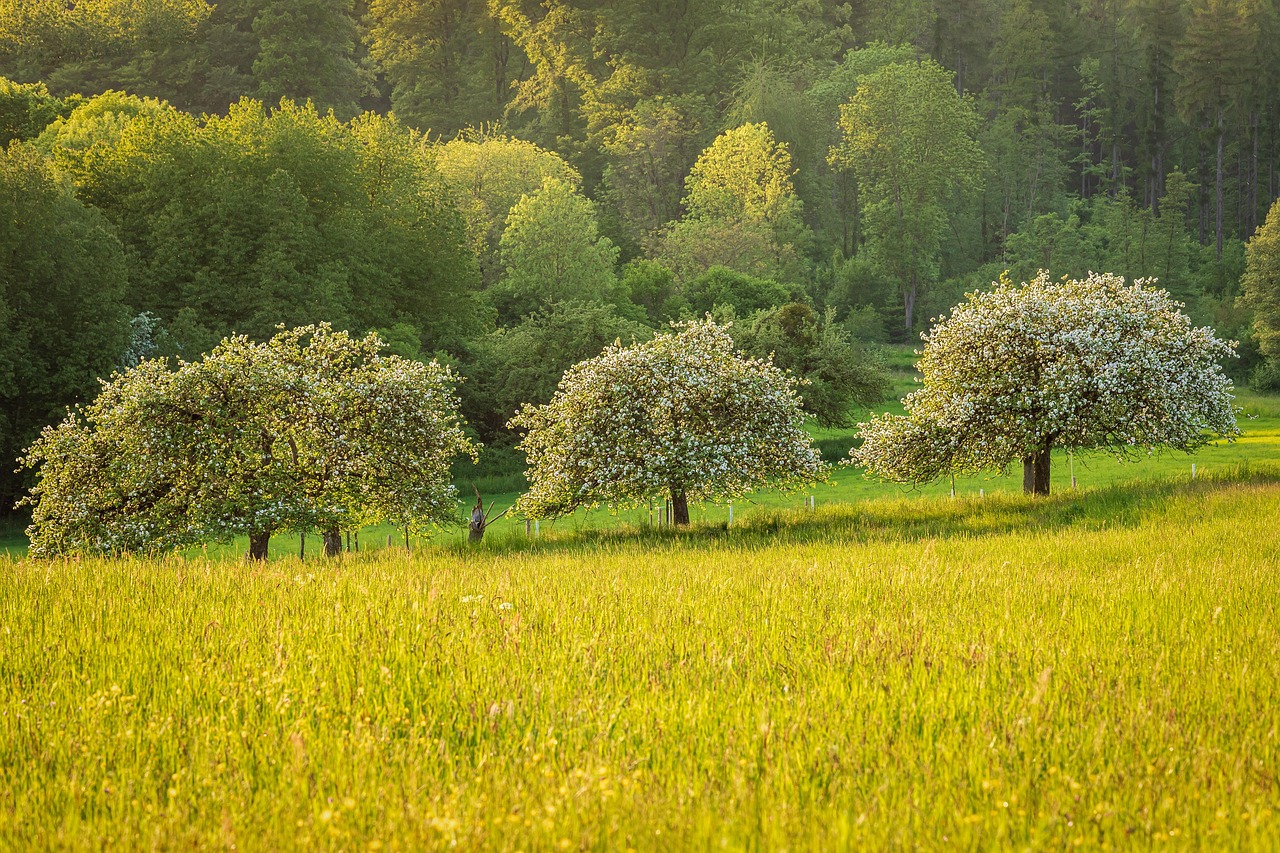
Below the canopy sits a layer of smaller trees, sized and shade-tolerant enough to fruit well in the broken light a canopy tree lets through rather than needing full, unobstructed sun. Many standard fruit trees fill this role well: apples, pears, persimmons, and similar mid-size trees. If you are choosing understory trees for a specific climate, our guide to cold-hardy fruit and nut trees for your growing zone covers matching varieties to your actual winters.
Shrub: the productive middle band
The shrub layer fills the space between the trees above and the ground-level plants below, typically three to ten feet tall. This is prime territory for fruiting bushes: blueberries, currants, and the wider world of edible shrubs covered in our guide to berry bushes and edible shrubs for food security. Shrubs are often the fastest payoff in the woody layers, frequently bearing a real harvest within two to three years.
Herbaceous: soft-stemmed perennials that come back every year
This layer covers non-woody perennials that die back to the ground each winter and regrow from the root each spring, without ever needing replanting. Edible flowers and shoots, culinary and medicinal herbs, and tough perennial ornamentals with a food use all belong here. It is one of the most flexible layers in the system, since herbaceous perennials tend to be forgiving about exact placement and tolerant of the partial shade a maturing food forest increasingly casts.
Ground cover: closing the gap at soil level
Anywhere bare soil is visible between other plants is an opportunity for weeds, erosion, and moisture loss, and the ground cover layer’s entire job is closing that gap. Low, spreading perennials that form a dense mat do the work passively: they shade the soil, hold moisture, and physically crowd out weeds competing for the same space. A food forest with a well-filled ground cover layer needs dramatically less weeding than one with exposed dirt between its other plants.
Root: the layer working underground
Below the soil surface, a root layer of perennial tubers and rhizomes uses space nothing else in the system is competing for. This is a smaller-scale, edible-focused cousin of the perennial vegetables covered in depth in our guide to perennial vegetables that you plant once and harvest for years, several of which work well tucked into the root layer of a larger food forest rather than grown as a standalone bed.
Vine: claiming the vertical space everything else leaves behind
The vine layer climbs, using trellises, fences, or the trunks of canopy and understory trees themselves as vertical support. Grapes are the classic choice, but any productive vine that tolerates being trained onto an existing structure fits the role. This layer effectively adds square footage to the system without taking any new ground: a vine trained up an already-planted tree is producing food from space that would otherwise sit unused.
One plant per layer, to see the shape of it


Affiliate note: buy through these links and ThisTracks may earn a small commission at no extra cost to you. We only list plants that are in stock and that we would put in our own ground.
Siting a food forest on a quarter acre or less
You do not need acreage to run this system, but you do need to think in terms of mature size from day one. The single most common mistake in a small-scale food forest is planting everything at its nursery size and spacing, then watching the canopy trees crowd out the shrub and herbaceous layers a few years later when they reach their real dimensions. Sketch the mature footprint of your canopy and understory trees first, on paper, before anything goes in the ground. Everything else gets fit into the gaps and shade patterns those trees will eventually cast, not the other way around.
Sun exposure drives the whole layout. The south side of your canopy trees, or the open side facing your strongest sun, is where sun-loving shrub and ground cover layers should go. The north side and the deeper shade under the canopy is where you place the layers that tolerate or prefer partial shade, since that is what they will get once the trees mature regardless of what they get in year one. Building this way from the start avoids relocating disappointed plants down the road.
Years to maturity: setting expectations honestly
A food forest rewards patience more than any other planting style on a homestead. Ground cover and herbaceous layers can look established within a single growing season. Shrubs, especially blueberries and brambles, often give a light harvest in year two and a real one by year three or four. Understory trees typically need three to five years before bearing meaningfully, and canopy trees can take five to ten years or more depending on species. None of this means the system is unproductive while it matures; it means the productivity arrives in stages, with the fastest layers feeding you early while the slowest layers are still establishing their root systems underground. Treat the first two or three years as a build-out phase, not a harvest failure.
Good soil accelerates every one of those timelines. A food forest planted into compacted, depleted ground establishes slower across every layer than the same planting on soil that has been built up first. If your starting soil needs work, our guide to building healthy soil and composting is worth doing in parallel with, or even ahead of, your planting plan.
A food forest is a lot of guilds, connected
If you have already read our piece on building a fruit tree guild, you have effectively already designed one small unit of a food forest: a tree with support plants stacked around it. A backyard food forest is that same thinking scaled across the whole property, with canopy and understory trees each getting their own supporting cast, and the shrub, herbaceous, ground cover, root, and vine layers filling in the space between guilds until the whole area functions as one connected system instead of a collection of separate plantings.
Common questions
How big does a yard need to be to call it a food forest?
There is no minimum. The seven-layer concept scales down to a single large tree with a handful of companion plants stacked around it, which is really just a fruit tree guild by another name. A true multi-guild food forest with distinct zones benefits from more space, roughly a quarter acre and up, but the underlying design principle works at almost any scale.
Do I need to plant every layer to get the benefit?
No. A food forest with four or five of the seven layers filled in is still capturing most of the benefit of stacked production and reduced maintenance. Start with the layers that suit your climate and interest most, canopy, shrub, and ground cover are a strong minimum viable version, and add the remaining layers over time.
How is this different from just planting a mixed orchard?
A mixed orchard is usually still one layer, trees, spaced in rows with mowed grass or bare soil between them. A food forest deliberately fills the vertical and underground space a mixed orchard leaves empty, with shrubs, ground covers, roots, and vines all doing productive work in the gaps. The orchard trees can absolutely be your canopy and understory layers; the food forest approach is what you do with everything else around them.
Backyard food forests, condensed
Think in seven stacked layers, canopy, understory, shrub, herbaceous, ground cover, root, and vine, and fill as many as fit your site and climate. Sketch mature tree size before you plant anything, put sun-loving layers on your brightest exposure and shade-tolerant layers under the canopy, and expect the lower layers to produce within a year or two while the trees take five to ten years to hit their stride. Build good soil alongside the planting rather than after it, and treat each tree-and-companions cluster as a guild, then connect enough guilds together and the whole yard starts functioning as one system instead of a series of separate beds.