Most disaster planning fixates on food, water, and shelter, and rightly so. But look at the actual death tolls after major disasters, and a quieter cause keeps showing up: disease from bad sanitation, not the storm or the earthquake itself. When water stops flowing, toilets stop flushing, taps stop running, and dishes stop getting properly washed, all within the same hour. What follows over the next days and weeks, if nothing is done about it, is the real danger: contaminated water, unwashed hands, and improperly managed human waste spreading illness through a household or a whole neighborhood. This guide covers the practical steps that keep a water-stopped household healthy: safe drinking water, hand hygiene without a tap, human waste disposal, food prep hygiene, and greywater and trash management.
Why sanitation collapses so fast
A working sanitation system is really several invisible systems running at once: pressurized clean water coming in, wastewater going out, a treatment plant processing what leaves your house. Cut the water supply and all three fail together, often within hours: the toilet stops flushing effectively, the tap stops giving you water for hands or dishes, and within a day or two a household can be sitting on accumulating waste with no reliable way to stay clean.
This is where the real risk lives. Cholera, dysentery, hepatitis A, and a long list of gastrointestinal illnesses spread through what public health workers call the fecal-oral route: waste contaminates water, hands, or food, and someone else ingests it. In a normal week that route is blocked at a dozen points by infrastructure you never think about. When the water stops, several of those blocks disappear at once, which is exactly why post-disaster illness outbreaks so often trace back to sanitation failures rather than the disaster event itself. The good news is that the same handful of habits that block that route in normal life still work here, they just take more deliberate effort.
Safe drinking water: the high-level basics
Drinking water is the first sanitation priority, because contaminated water is both a direct illness risk and the thing you will be using for hand hygiene, food prep, and cleaning. If you are drawing from a questionable source (a rain barrel, a stream, a tap that may have lost pressure and let contaminants in) it needs to be treated before use: a rolling boil for at least one minute (three minutes above roughly 6,500 feet), or disinfection appropriate to the water, unscented household bleach at the standard ratio for clarified water, a certified purification tablet, or a filter rated to remove bacteria, viruses, and protozoa. ThisTracks covers water storage and supply planning in Water and Food Storage 101, and goes deeper on filters in Berkey Filters and Other Portable Water Purifiers, so treat this as a reminder rather than the full picture: never assume a source is safe because it looks clear, and keep a treatment method on hand before you need it. Once your supply is uncertain, that uncertainty extends to every use of water, not just drinking: water for rinsing a wound, mixing infant formula, or washing produce needs the same scrutiny as water you would drink straight.
Hand hygiene without a running tap
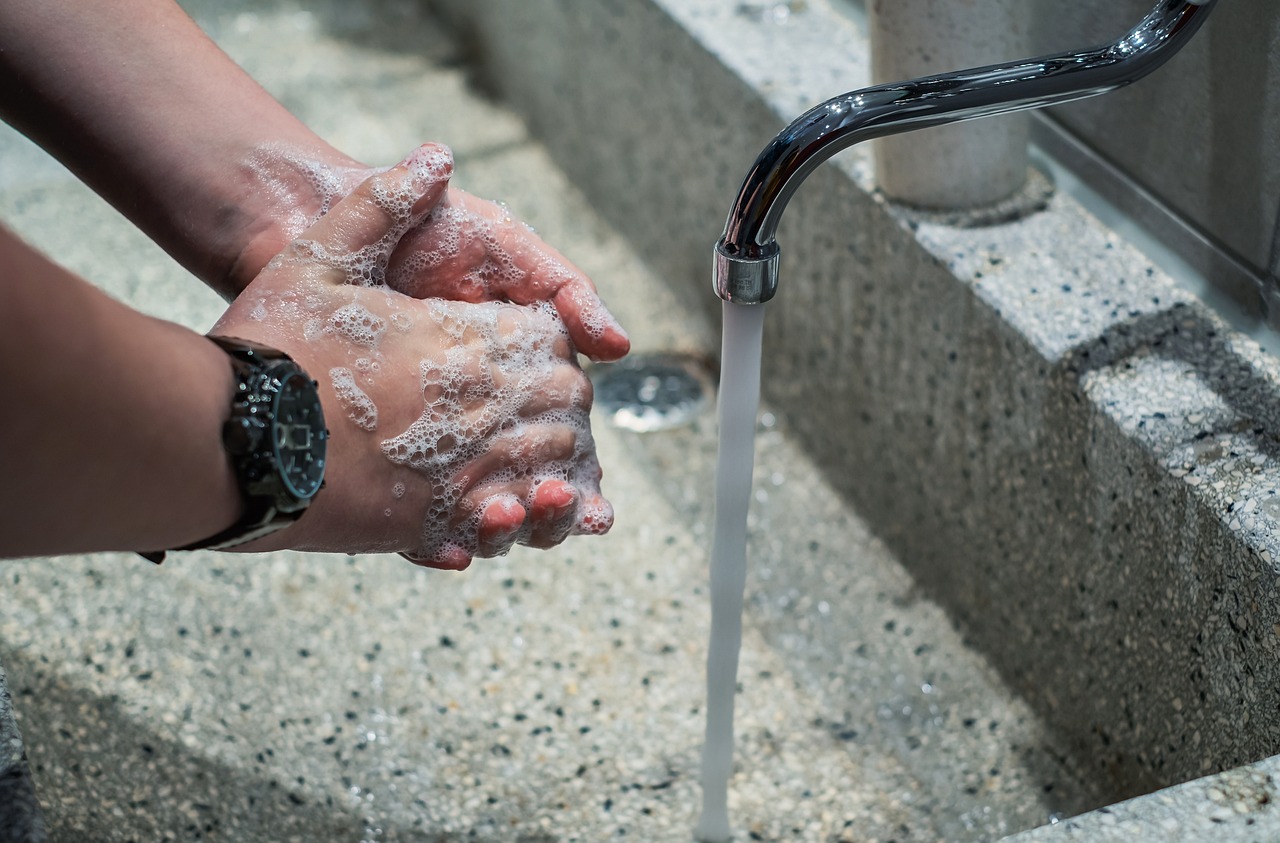
Handwashing is the single cheapest, highest-value disease prevention tool that exists, and it is also the first habit that quietly slips when the tap goes dry. The fix is not complicated, it just needs to be set up deliberately.
- Set up a tippy-tap or gravity dispenser. A jug of water with a small spigot or a pinhole, hung above a basin, lets you wash with a controlled trickle instead of dunking hands in a shared bowl that gets dirtier with every use.
- Use soap, not just water. Plain water rinses visible dirt but does far less against the pathogens that actually cause illness. Keep soap at every hand station in the house.
- Hand sanitizer is a real backup, with limits. It works against many viruses and bacteria but does much less on visibly soiled or greasy hands, and it does not work well against some gastrointestinal pathogens like norovirus. Treat it as a supplement to washing, not a replacement.
- Post the moments that matter. Before eating or preparing food, after using the toilet, after handling waste or trash, and after caring for someone who is sick. A written reminder by every water station sounds unnecessary until day four, when habits slip and reminders start to matter.
Human waste disposal: the twin-bucket approach
Once the toilet cannot flush reliably, human waste management becomes the single most important sanitation task in the house, because mishandled waste is the most direct route to contaminating water and food. The twin-bucket, or emergency toilet, system is the standard low-tech solution, and it works well if you set it up before you need it.
- Two five-gallon buckets, minimum. One in active use, lined with a heavy-duty bag. A second staged as backup so you are never scrambling mid-emergency. A snap-on toilet seat lid makes the setup far more usable and improves compliance across the household, kids included.
- Cover material after every use. A scoop of absorbent material, sawdust, pelleted cat litter, ash, or garden lime, over the waste each time. This is not optional: it controls odor, slows pathogen growth, and reduces the disease-carrying insects waste attracts within a day or two in warm weather.
- Bag and seal when full, not before. When a liner reaches roughly two-thirds full, tie it off, double-bag it if possible, and move it to a sealed secondary container well away from the house, any water source, and anywhere food is stored or prepared.
- Distance and drainage matter as much as sealing. Keep waste storage far from any well, rain catchment, or stored water, and uphill from where water runs during rain. Waste that leaches into a water source undoes every other precaution you have taken.
- Know your disposal plan before you need it. In an extended outage, check with local emergency management for approved disposal, since some municipalities set up temporary collection points. Never let sealed waste reach groundwater, storm drains, or a neighbor’s property.
Menstrual and infant hygiene
These needs do not pause during an outage and deserve a specific plan rather than an afterthought. For menstrual hygiene, stock reusable options (menstrual cups or washable pads) alongside disposables, since reusables cut both waste volume and dependence on resupply, and keep a dedicated, sealable disposal bag for used products separate from general trash. For infant hygiene, keep a supply of unscented wipes for when washing is not practical, and if you use cloth diapers, keep a dedicated washing basin and treat diaper waste with the same seal-and-isolate approach as other human waste. Formula-fed infants add one non-negotiable requirement: water used to mix formula must be treated to the same standard as drinking water, every time.
Food preparation hygiene when you cannot wash normally
Food handling is where sanitation and food safety overlap, and it is an easy place for standards to slip when washing dishes properly feels like a luxury. A few adjustments keep the risk down:
- Wash hands before food prep, every time. This is the single highest-leverage habit in this entire guide.
- Use a three-basin approach for dishes: wash, rinse, sanitize. Soap and warm water, then a clean-water rinse, then a final basin with a mild bleach solution or boiling-hot water, sanitizes dishes on far less water than a running tap would use.
- Favor foods that need minimal prep. Shelf-stable and ready-to-eat foods reduce how often raw ingredients, surfaces, and hands intersect, cutting contamination opportunities while full kitchen sanitation is hard to maintain.
- Treat cooking water like drinking water. Boiling food in untreated water does not reliably neutralize every contaminant the way boiling the water itself does, so treat first, then cook.
- Separate raw and ready-to-eat surfaces and utensils. Cross-contamination risk goes up, not down, when you have less water to clean between tasks.
Greywater and trash management
Greywater, the runoff from washing dishes, hands, or bodies, is not sewage, but it is not harmless either, and it needs a plan so it does not pool near the house or contaminate a water source. Collect it in a dedicated container, let solids settle, and dispose of it well away from stored water, food-growing garden beds, and any low spot where it would pool and breed insects. Trash matters more than people expect during an extended outage too: food waste and packaging attract pests and disease vectors fast, especially in warm weather, so bag it, seal it, and store it away from the house and away from your waste and water setups until you can dispose of it properly.
When symptoms mean you need professional care
Good sanitation habits dramatically reduce risk but do not eliminate it, and knowing when a symptom has crossed from manageable to serious is part of the plan. Watch for signs of dehydration (dizziness, very dark urine, no urination for many hours), diarrhea that is bloody, severe, or persists beyond a couple of days, a fever that will not break, or any sign of illness in an infant, an elderly household member, or someone immunocompromised. These call for professional medical evaluation rather than home management, and if normal emergency services are disrupted, that may mean using whatever official channel, a shelter medical station, a local emergency line, a community health resource, is functioning in your area. ThisTracks covers building the skills and supplies for everyday injuries and illness in Basic First Aid: Essential Skills Every Prepper Should Know, but sanitation-related illness specifically is not something to tough out at home once it moves past mild.
Common questions
How long can human waste safely sit in a sealed bucket before it needs to move?
Move it out of living space as soon as a liner is roughly two-thirds full, rather than waiting for a fixed time. Cover material slows odor and pathogen growth but does not stop it indefinitely, and warm weather shortens the safe window. Plan for frequent, small removals rather than letting one container fill completely.
Is hand sanitizer good enough if I do not have water to spare for handwashing?
It is a reasonable backup, not a full substitute. It works less well on visibly dirty or greasy hands and against some common gastrointestinal viruses. Set aside a small, dedicated amount of water for handwashing at the highest-risk moments (before food prep, after waste handling) and use sanitizer in between.
Can I just dig a hole in the yard instead of using the bucket system?
A properly built and located latrine can work, but placement matters: far from any well or water source, away from surface water flow, deep enough with adequate cover material. For most households, especially in a suburban or urban setting, the sealed bucket system is simpler to do correctly without specialized knowledge of local soil and water table conditions.
Sanitation when the water stops, condensed
Treat every water source as suspect until it has been boiled or disinfected, set up a deliberate handwashing station the day the water goes out rather than the week after, manage human waste with a sealed twin-bucket system and cover material, keep food prep hygiene tight even when washing dishes feels like a luxury, and know the symptoms that mean it is time to seek real medical care instead of waiting it out. None of this requires expensive gear. It requires setting the system up before you need it, and sticking with the habits once things get inconvenient.
This article is for general educational and preparedness planning purposes only and is not medical advice. It does not replace guidance from a qualified healthcare provider or from public health and emergency management officials, whose instructions should always take priority during an actual emergency. If you or someone in your household is experiencing a medical emergency, seek professional care immediately.