The disaster most likely to tear through your household this year will not arrive as a storm or a blackout. It arrives as a stomach bug: one person doubled over at 2 a.m., and within two days half the family is down. Foodborne and stomach illnesses are the quiet, common emergencies of ordinary life, and they surge in predictable waves, norovirus through the colder months, produce-borne parasites like Cyclospora in the warm ones. They rarely make the news the way a hurricane does, yet they are far more likely to actually flatten your household. Knowing how these outbreaks work, how to avoid them, how to treat them, and above all how to keep one sick person from becoming five is a genuine and badly underrated piece of preparedness.
Know what you are dealing with
Not every stomach illness is the same, and the differences change how you respond. Three broad culprits cause most of the trouble:
| Illness | Usual source | Onset / duration | Treatment | Spreads person to person? |
|---|---|---|---|---|
| Norovirus | Surfaces, food, water, and infected people | 12 to 48 hours; lasts 1 to 3 days | Supportive: rest and aggressive rehydration | Yes, extremely |
| Cyclospora | Contaminated fresh produce, often imported | About a week; can drag on for weeks and relapse | A specific prescription antibiotic | No, not directly |
| Bacterial food poisoning (Salmonella, E. coli, others) | Undercooked meat, eggs, raw produce, unwashed hands | Hours to a few days; varies widely | Usually supportive; some need antibiotics | Sometimes |
The two worth understanding in detail, because they behave so differently, are norovirus and Cyclospora. Get those two right and you understand the whole category.
Norovirus: the household wildfire
Norovirus is the one that turns a single case into a family outbreak, and it earns every bit of its reputation on cruise ships and in schools. It is astonishingly contagious: it takes only a tiny number of virus particles to infect you, an infected person sheds billions, and it survives on surfaces and resists many common cleaners. It hits fast, usually 12 to 48 hours after exposure, with sudden vomiting and diarrhea, and for an otherwise healthy person it passes in one to three miserable days. There is no specific drug for it; your job is to ride it out while replacing fluids and, critically, to stop it from spreading.
Two facts change how you fight norovirus. First, alcohol hand sanitizer does not reliably kill it, so hand sanitizer is not enough; you must wash with soap and running water. Second, it lingers on surfaces, so wiping with an everyday spray is not enough either; disinfect contaminated surfaces with a bleach-based cleaner. Those two corrections are the difference between one sick family member and all of them.
Cyclospora: the produce parasite
Cyclospora is a very different animal, a microscopic parasite that rides on fresh produce, frequently imported items eaten raw such as berries, bagged salad, basil, cilantro, and snow peas. Outbreaks cluster in the spring and summer. It causes watery diarrhea that is notable for how long it lasts: often a week or more, sometimes stretching into weeks, and it has a habit of seeming to improve and then relapsing. That prolonged, relapsing pattern is the tell. Unlike norovirus, it does not spread directly from person to person, but it also will not simply run its course quickly, because Cyclospora is treated with a specific prescription antibiotic (commonly the combination drug trimethoprim-sulfamethoxazole). If you or a family member has watery diarrhea that drags on well beyond a few days, that is a reason to reach a doctor, not to wait it out.
Prevention is trickier than with a simple wash. Routine rinsing lowers the risk but does not reliably remove Cyclospora, and sanitizers do not kill it; thorough cooking does. Because it hides on raw produce, staying aware of active recalls and outbreak alerts is a genuine part of avoiding it.
The shared defense: food and water safety
Whatever the specific bug, the same unglamorous habits block most of them:
- Wash your hands with soap and water before handling food and after using the toilet or caring for someone sick. This single habit prevents an enormous share of illness.
- Cook it through. Heat kills the bacteria and parasites that raw or undercooked meat, eggs, and produce can carry.
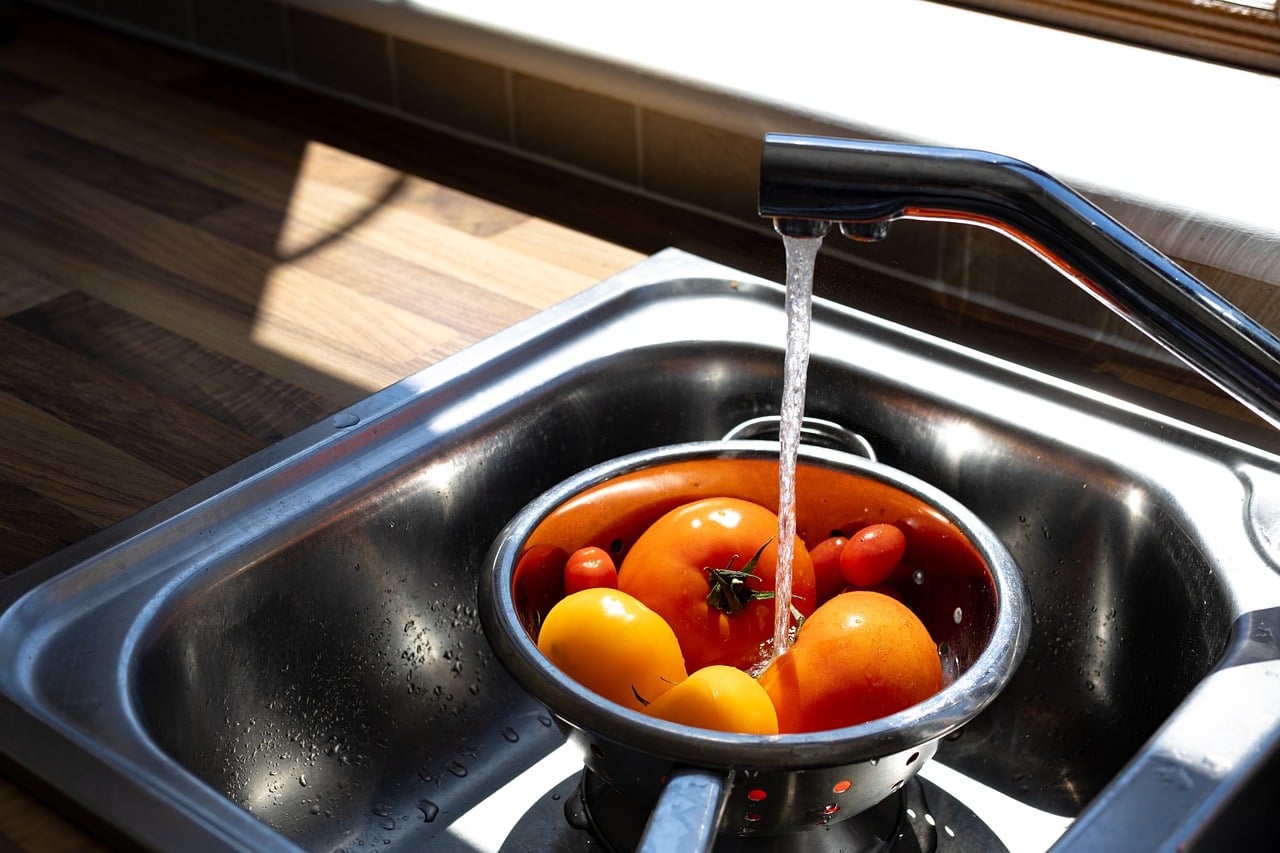
- Handle produce carefully and keep raw meat separate from things you will eat uncooked. Rinse fruits and vegetables, understanding it reduces rather than eliminates certain risks.
- Keep your water clean. Contaminated water spreads gastrointestinal illness readily, and a reliable filter gives you safe water when the supply is in doubt, which ties into finding and treating water.
- Mind recalls. When a specific food is named in an outbreak, do not eat it, and check whether anything in your fridge or pantry is affected.
Safe water when the supply is in doubt

Affiliate note: buy through this link and ThisTracks may earn a small commission at no extra cost to you. We only list gear that is in stock and that we would carry ourselves.
Treatment: rehydration is the whole game
For norovirus and most stomach bugs, there is no cure to take; your body clears the infection while you keep it supplied. The thing that actually turns a survivable illness into a dangerous one is dehydration, because vomiting and diarrhea drain fluid and electrolytes fast. So the single most important treatment is steady rehydration: small, frequent sips even when it is hard to keep down, using an oral rehydration solution rather than plain water alone. A commercial rehydration product is ideal; a serviceable homemade version is one liter of clean water, six level teaspoons of sugar, and half a teaspoon of salt. Rest, and reintroduce bland food as it is tolerated.
A word on anti-diarrheal medicines like loperamide (Imodium), because they are widely misunderstood. For an adult with simple watery diarrhea and no fever or blood, they can ease symptoms. But do not use them if there is bloody diarrhea or a high fever, which can signal an invasive infection that these drugs may worsen by keeping it in the gut, and avoid them in young children unless a doctor directs. They quiet a symptom; they do not cure the infection. For something like Cyclospora, the real fix is the prescription, not an anti-diarrheal. Keep them in the kit as a limited tool, and lead with rehydration.
When to stop treating at home and get help
Home care has limits, and knowing them matters most for the vulnerable. Seek medical care for signs of serious dehydration (little or no urination, dizziness, sunken eyes, no tears, lethargy), blood in the stool or vomit, a high or persistent fever, diarrhea that lasts more than a few days or keeps relapsing (the Cyclospora pattern, which needs a prescription), or any illness in an infant, an older adult, a pregnant person, or someone with a weakened immune system, where dehydration turns dangerous much faster. When in doubt about a small child or a frail elder, lean toward getting help sooner, not later. This connects to the broader skill of managing illness and infection when care is not immediately at hand.
Stop it from sweeping your household
With a contagious bug like norovirus, containment is half the battle, and it is where most families fail. The moment someone is sick, act as if it is highly transmissible, because it is. Isolate the sick person to one bathroom if you can. Have them wash their hands relentlessly, and everyone else too, with soap and water. Disinfect shared surfaces, doorknobs, faucets, and toilet handles with a bleach-based cleaner. Wash soiled laundry hot and do not shake it out. Keep the sick person’s dishes and towels separate. A caregiver should wash up immediately after any contact. These measures feel like overkill until you have watched one stomach bug march through an entire household over a week, taking down the caregivers last, when everyone is already exhausted.
Staying current without panic
Foodborne outbreaks and recalls are a constant, seasonal background hum, not a rare shock, and a little awareness goes a long way. Public health agencies publish active outbreak and recall information, and glancing at it now and then, especially in produce season for parasites and in the colder months for norovirus, lets you avoid a named food before it reaches your table. You do not need to live in fear of your groceries; you need to know when a specific item has been flagged and to keep the everyday habits that block the rest. Preparedness here is mostly steady, boring hygiene plus the willingness to skip the recalled bag of salad.
Quick questions
Is this the same as “food poisoning”? Overlapping but not identical. “Food poisoning” usually means a bacterial illness from contaminated food, which often passes on its own with rest and fluids. Norovirus is a virus that spreads person to person as easily as through food, and Cyclospora is a parasite that needs a prescription. The shared response, rehydration and hygiene, is similar; the details differ.
Will washing produce protect me from Cyclospora? It helps but does not guarantee it, because the parasite clings stubbornly and sanitizers do not kill it. Thorough cooking is the sure defense, and avoiding produce named in an active outbreak is the other. For raw items you cannot cook, recall awareness is your best tool.
Should I take antibiotics I have on hand for a stomach bug? No, not on your own. Most stomach bugs are viral and antibiotics do nothing for them; the wrong drug can even prolong some infections and breeds resistance. Cyclospora needs a specific prescription matched by a doctor. Leave the diagnosis and the drug choice to a professional.
Outbreak season, condensed
- Stomach bugs are the likeliest illness to sweep a household; norovirus peaks cold months, Cyclospora warm ones.
- Norovirus is wildly contagious: wash with soap (not just sanitizer) and bleach surfaces.
- Cyclospora rides raw produce, causes prolonged diarrhea, and needs a prescription, not patience.
- Rehydration is the core treatment; anti-diarrheals are a limited tool and never for bloody or feverish illness.
- Isolate the sick, watch for dehydration, and mind CDC and FDA recalls.
This is general educational information, not medical advice. For a sick infant, older adult, or anyone with severe or prolonged symptoms, or any sign of serious dehydration, seek professional medical care.
The stomach bug is the disaster nobody prepares for and almost everybody eventually faces. Understand how norovirus and Cyclospora actually behave, keep the boring habits of handwashing and clean food and water, treat with steady rehydration, know the danger signs that mean it is time for a doctor, and contain a sick person before the illness spreads, and you turn the most common household emergency there is into a manageable few bad days rather than a week of everyone down at once. That quiet competence, applied to the ordinary threats, is what real preparedness looks like.