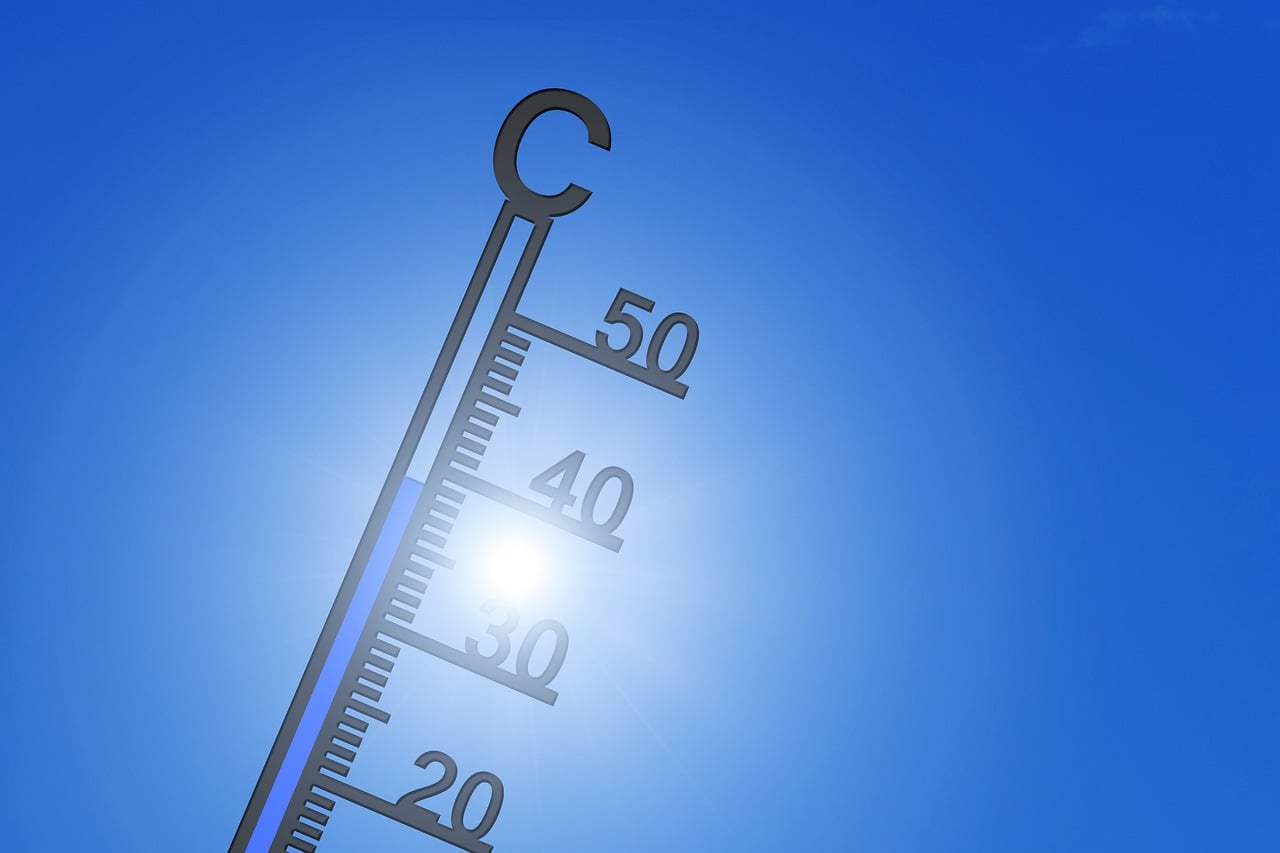
A heat wave that began in the last days of June has now stretched across most of a month, and it is not finished. As of late July 2026, a fresh and unusually strong heat dome has built over the Rockies and Plains and is pushing east, and the numbers underneath it are the kind that stop being an abstraction the moment your power flickers or an older neighbor stops answering the phone. This is a live event, still moving, and it is worth understanding both what is happening and what actually protects a household when the air itself becomes the hazard. Nothing here is medical advice; when heat crosses into a medical emergency, the only correct move is to call 911, and we will come back to how you tell the difference.
What is actually happening right now
The 2026 North American heat wave started around June 28 and has run in waves ever since, driven by a succession of heat domes rather than one single blocking pattern. A heat dome is a ridge of high pressure that parks over a region and sits there. The sinking air under that ridge compresses and warms, dries out, and suppresses the clouds and rain that would normally take the edge off an afternoon. The longer the dome holds, the hotter the ground gets, and the hotter ground feeds back into hotter air, which is why these events tend to escalate day over day instead of peaking and breaking quickly.
The current dome is the strongest of the summer so far. Through late July it has been driving central-US temperatures past 110 degrees, and forecasters have been tracking it as one of the more intense high-pressure ridges on the planet at the moment. As it slides east, the population in its path grows fast. On July 25 the East Coast was bearing the brunt, with more than 80 million people under a major or extreme heat risk. Around July 28 that figure is expected to climb to nearly 150 million, close to half the country under serious heat risk at the same time. The pattern then looks likely to settle over the Southeast through roughly the end of the month, with cities such as Columbia, South Carolina, and Tallahassee, Florida, in line to tie or break daily records in the low 100s.
The records already on the board
Earlier phases of this same heat wave have already rewritten record books on both sides of the border. Atlantic City, New Jersey, hit 106 degrees on July 4, tying its all-time high. Phoenix ran up to 113. Salt Lake City reached 109 degrees on July 12, a new all-time record for the city, and Billings, Montana, touched 111 the same day. The heat pushed well into Canada, too: Armstrong, Ontario, recorded 40.7 degrees Celsius, about 105 Fahrenheit, on July 13, the hottest reading there since 1936.
Records matter here for a practical reason, not a trivia one. An all-time high means the local infrastructure, the housing stock, the power grid, and the people are all being asked to handle conditions the area has essentially never handled before. That is exactly when systems fail and when the human toll shows up. By July 8, at least 44 heat-related deaths had already been reported across New Jersey, Pennsylvania, Illinois, New York, and Mississippi. Heat is consistently one of the deadliest forms of severe weather, and it kills quietly, indoors, over hours, not in a dramatic single moment.
The health threat, and the line you must not cross
The most important skill during a heat dome is telling ordinary heat discomfort apart from a genuine emergency. Heat exhaustion looks like heavy sweating, cold and clammy skin, weakness, nausea, headache, dizziness, and a fast but weak pulse. It is serious, and it is your warning shot: move the person to a cool place, loosen clothing, apply cool wet cloths, and give small sips of water if they are alert. Heat stroke is different, and it is a true medical emergency. The signs are a body temperature that climbs fast, skin that may go hot and dry or stays damp, confusion or slurred speech, a pounding and rapid pulse, and sometimes fainting or seizures. If you see confusion or a loss of consciousness in someone who has been in the heat, call 911 immediately and begin cooling them aggressively while you wait. Do not wait to see if it passes. Our full guide to staying alive when the sun is the threat goes deeper on recognizing and treating heat illness in the field.
The core principle for prevention is simple and it does not depend on any gadget: get out of the heat, get water in, and reduce the work your body is being asked to do. Hydrate before you feel thirsty, because thirst lags behind actual fluid loss. Shift anything strenuous to the early morning or skip it entirely. And find the coolest air you can reach, whether that is your own home, a basement, or a public cooling center, and stay in it during the worst hours of the afternoon.
When the grid is part of the problem
The hardest version of a heat dome is the one where the air conditioning stops. Extreme heat drives electricity demand to its limits precisely when everyone needs cooling most. During this event the PJM Interconnection, which runs the grid across a large stretch of the eastern US, pushed close to its all-time demand record near 165 gigawatts, and severe thunderstorms along the leading edge of the heat knocked out power to well over a million customers earlier in the month. A heat wave and a blackout are not separate disasters. They arrive together, and the blackout is what turns a dangerous day into a deadly one.
This is why a heat plan and a power plan are the same plan. Know in advance where you would go if your home lost cooling for a day or more, whether that is a relative’s house, a hotel a county over, or an official cooling center. If you rely on backup power, understand honestly what it can and cannot run; a window air conditioner is a heavy load, and our guide to sizing backup power that actually works walks through the math before you find out the hard way. For the longer-tail scenario, where the outage stretches past a few hours, surviving a long-term power grid failure covers the wider picture, and sheltering in place covers how to make a home livable when you cannot leave it.
Who is most at risk, and why checking in matters
Heat does not hit everyone equally. Older adults, infants and young children, people with chronic heart or lung conditions, people on certain medications, outdoor workers, and anyone without reliable air conditioning carry far more of the risk. Many heat deaths are people who were alone, indoors, with the windows closed and a fan that was not enough. The single most effective thing most of us can do during a heat dome costs nothing: check on the people around us who fall into those groups, in person or by phone, twice a day while the heat holds. A fan alone stops helping once indoor temperatures climb into the 90s, because it is just moving hot air, so a genuine check means asking whether someone actually has a cool place to be, not just whether they are managing.
If you have pets, they are on this list too. The pavement that is uncomfortable to your hand is burning to a paw, and a parked car becomes lethal within minutes. Walk animals at dawn or after dark and never leave them, or a child, in a vehicle for even a short errand.
The secondary hazards riding along with the heat
A heat dome rarely travels alone. The same hot, dry conditions that define it also prime the landscape to burn, and this event has already fed wildfires in southwestern Ontario and northern Minnesota, with smoke degrading air quality across parts of the Midwest and Northeast. Poor air quality stacks on top of the heat, especially for anyone with asthma or a heart condition, and it argues for keeping windows shut and staying indoors on the worst days even if the temperature alone might have been tolerable. If you are anywhere near fire-prone country, now is the week to confirm your defensible space and your go-bag are ready, as covered in our guide to wildfire preparedness. The leading edge of a heat dome also tends to fire off violent thunderstorms, which is how the early-July power outages happened, so a plan for sudden severe weather belongs in the same breath as the heat plan.
What to do this week
If you take nothing else from this, take the short version. Stay ahead of the heat rather than reacting to it. Drink water before you are thirsty and keep it going through the day. Move activity to the cool hours and cancel what you can. Identify your cool place now, before you need it, and know how you would get there if your own power fails. Keep windows and blinds closed against the daytime sun and open up only when the outside air genuinely drops below the inside. Learn the difference between heat exhaustion and heat stroke well enough to act on it, and treat confusion or fainting as the 911 call it is. Check on your vulnerable neighbors, your older relatives, and your animals, twice a day, for as long as this lasts. And keep a basic home emergency kit and enough stored water on hand that a sudden outage is an inconvenience rather than a crisis.
This heat dome is a weather event, and it will pass. The habits it should leave behind, checking on people, treating heat and power as one problem, and knowing your cool place before the afternoon it matters, are the part worth keeping for the next one. For official alerts specific to your area, always defer to your local National Weather Service office and local emergency management, which have the current watches, warnings, and cooling-center locations for exactly where you are.