Of all the ways preparedness gets distorted, medical readiness is the worst. People buy a wall of tactical trauma gear they have never trained on, while lacking the basic skills to handle the injuries and illnesses that are a hundred times more likely. Real medical preparedness is not a bigger kit. It is capability: the combination of knowledge, skills, and supplies that lets you actually help someone when professional care is minutes or hours away. And the order matters, because skills come before gear, every time.
Build capability in tiers
Think of medical readiness as three tiers, built in order. Skipping ahead to buy advanced gear before you have the tier below it is the classic mistake. Here is the shape at a glance, then each tier in turn:
| Tier | Handles | The real work |
|---|---|---|
| 1. Everyday | Cuts, burns, sprains, fevers, stomach bugs | A stocked kit plus basic first aid skill |
| 2. Trauma | Severe bleeding, shock, major wounds | A few key items plus real hands-on training |
| 3. Ongoing care | Prescriptions, chronic conditions, infection | A medication buffer and household knowledge |
Tier one: everyday medical readiness
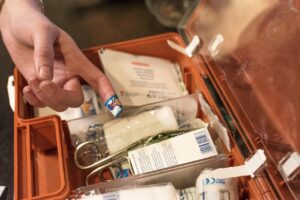
This handles the injuries and illnesses you are genuinely likely to face: cuts, burns, sprains, fevers, allergic reactions, and stomach bugs. It requires a well-stocked kit and the knowledge to use it, which is the subject of basic first aid every prepper should know. The vast majority of your medical usefulness lives right here, in the boring, common stuff. Master it first.
The everyday foundation

Affiliate note: buy through this link and ThisTracks may earn a small commission at no extra cost to you. We only list gear that is in stock and that we would carry ourselves.
Tier two: trauma and serious injury
This is where you gain the ability to keep someone alive until help arrives: stopping severe bleeding, treating shock, and managing a major wound. It centers on a few high-value items and, critically, the training to use them, because a tourniquet applied wrong can do harm. We cover building this capability in building a trauma kit that can actually save a life and the skills in advanced first aid for serious injuries.
Bleeding control

Affiliate note: buy through this link and ThisTracks may earn a small commission at no extra cost to you. We only list gear that is in stock and that we would carry ourselves.
Tier three: ongoing health without the system
The tier almost everyone forgets. In a prolonged emergency, the biggest medical threat is rarely dramatic trauma. It is the interruption of ongoing care: the prescription that runs out, the chronic condition that goes unmanaged, the infection with no doctor. This means keeping a buffer of essential prescription medications, understanding the conditions in your household, and knowing basic care for illness and infection. For most families with any ongoing health need, this quiet tier matters more than any trauma gear they will ever buy.
Skills outrank supplies, always
A trauma kit in the hands of someone who has never trained is close to useless, and can be dangerous. The most important investment in medical preparedness is not gear at all; it is a hands-on class. Take a basic first aid and CPR course, and if you can, a bleeding-control class. A weekend of real training makes you more capable than a thousand dollars of equipment you have never touched. Buy the skills first, then the gear to apply them.
Train for what actually happens
People gravitate to the dramatic, gunshot wounds and amputations, and skip the mundane threats that are far likelier to hurt their family. In a real prolonged emergency, the medical problems that pile up are unglamorous: a cut that turns into a spreading infection with no antibiotics, dehydration from a stomach illness, a chronic condition sliding out of control without medication, an untreated dental problem, a fall in the dark. Aim your learning there. Know the signs of infection and when it is spreading, how to keep someone hydrated through illness, how to manage a sprain or simple fracture, and how to keep a chronic condition stable when the pharmacy is closed. Those everyday skills, matched to the risks you will actually meet, are worth more than any exotic technique you will almost certainly never use.
Know your people and your limits
Good medical preparedness is specific to your household. Know everyone’s conditions, allergies, medications, and blood types. Keep that information written down and in your home kit. Coordinate with your family’s doctors and caregivers about extended supplies and backup plans. And know your limits honestly: the goal is to stabilize and sustain until professional help is reachable, not to perform surgery on the kitchen table. Overreaching beyond your training does more harm than good.
Pay special attention to the people whose needs differ from a healthy adult’s. Infants and children need different medication dosages and gentler techniques, and CPR or a choking response on a child is not the same as on an adult. Older family members may have fragile skin, brittle bones, and long medication lists that interact. A pregnancy changes several calculations, from safe positioning to which medicines can be used. Learn the specifics for the actual people under your roof, because these are exactly the details that get overlooked in the moment, and a plan built only for an average adult can leave your most vulnerable family members underserved.
Quick questions
What is the single best first purchase for medical preparedness? A training class, not a product. A basic first aid and CPR course, ideally with a bleeding-control add-on, turns everything else you buy into real capability. Book the class first, then stock the tier-one kit to practice with.
Do I need advanced trauma gear if I am not trained? No. Untrained trauma gear is a false sense of security and can cause harm. Build tier one fully, get trained, and only then add trauma items you actually know how to use.
Medical readiness, condensed
- Capability, not a bigger kit. Skills come before gear, always.
- Tier one: everyday injuries and illness. Master the common stuff first.
- Tier two: bleeding control and trauma, with real training to match.
- Tier three: keep ongoing care going, especially prescriptions.
- Take a hands-on class. Know your household’s conditions and your limits.
This is general educational information, not medical advice. Get hands-on training from a certified instructor, and rely on professional care whenever it is reachable.
Medical emergencies are among the most likely and most consequential things any family will face, disaster or not. Build capability in order, put your money into training before equipment, and you become the person who can actually help in the minutes that decide an outcome. That is worth more than any other single skill in preparedness.