Not long ago, a global pandemic was the kind of scenario most people filed under unlikely. Then one arrived and reshaped daily life for years, and it turned out that the households which coped best were not the ones with the most dramatic gear, but the ones with quiet, sensible preparations: a deep pantry, a plan to stay home, and a level head. A pandemic is a slow-motion disaster measured in months, and preparing for one is less about survival drama and more about resilience, information, and the discipline to reduce your exposure while ordinary life is disrupted.
What a pandemic actually does to a household
Unlike a storm, a pandemic does not damage your home; it disrupts the systems and routines around it, often for a long time. The practical impacts to prepare for are:
- Pressure to stay home, for weeks or months, to avoid exposure, which strains any household that cannot supply itself.
- Supply disruptions, as demand spikes and supply chains strain, emptying shelves of essentials.
- Strained medical systems, where hospitals are overwhelmed and routine care becomes harder to access.
- Economic disruption, from lost income and business closures.
- Isolation and its mental toll, which grinds on people over the long haul.
Notice that these are the same disruptions you prepare for generally, which means much of your standard preparedness applies directly to a pandemic.
The ability to stay home is your best defense
The single most powerful pandemic preparation is being able to stay home and reduce contact during a wave of illness without running out of essentials. That means a deep supply of food, water, medications, and household goods, so that avoiding crowded stores is an option rather than an impossibility. A household stocked for several weeks can dramatically cut its exposure during the most dangerous periods, which protects both your family and, by reducing spread, your community.
Stock to stay home

Affiliate note: buy through this link and ThisTracks may earn a small commission at no extra cost to you. We only list gear that is in stock and that we would carry ourselves.
Health supplies and hygiene
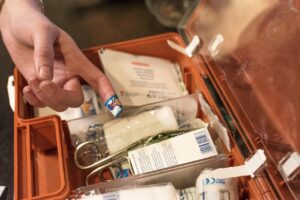
Pandemic preparedness leans heavily on health and sanitation. Keep a good supply of the basics that fly off shelves first: soap and hand sanitizer, cleaning and disinfecting supplies, and personal protective items like well-fitting masks and gloves. Stock over-the-counter medications for fever and symptom relief, a thermometer, and a buffer of any prescription medications your family relies on, since refills may become harder to get. Basic medical preparedness matters more than usual when the healthcare system is strained and you may need to manage minor illness at home.
Information hygiene matters as much as hand hygiene
In a pandemic, a second contagion spreads alongside the disease: fear, rumor, and misinformation. It causes panic buying, bad health decisions, and enormous stress. Protect yourself with good information hygiene. Rely on credible health authorities and established medical sources rather than social media rumor and sensational headlines. Ration your intake of frightening news, which can spike anxiety without adding useful knowledge. Making calm, evidence-based decisions is one of the most protective things you can do for your household, both for your physical safety and your mental health. In an information flood, the ability to find the signal and ignore the noise is a genuine survival skill.
Plan for isolation and illness in the home
Think through what happens if someone in your household gets sick. Have a plan to isolate a sick family member, a designated space, separate supplies, and hygiene practices to limit spread within the home. Know the signs that warrant professional care versus home management. And prepare for the practical side of extended time at home: how work, school, and childcare will function, and how you will support the mental health of everyone through prolonged isolation, drawing on the coping strategies in building resilience.
The same foundation, aimed at a slow disaster
Much of pandemic readiness is simply your all-hazards foundation applied to a long, slow event: deep water and food storage, financial resilience to weather lost income, and the ability to reduce dependence on crowded, strained systems. Preparing for supply disruption overlaps heavily too, since shortages and pandemics travel together. The household that has built this foundation is already most of the way ready for a pandemic.
Pandemic preparedness, condensed
- A pandemic disrupts systems for months; much of your standard prep applies.
- The ability to stay home and reduce contact is your strongest defense.
- Stock hygiene, disinfectant, masks, symptom medications, and prescription buffers.
- Practice information hygiene: trust credible sources, ration frightening news.
- Plan to isolate illness at home and support everyone’s mental health.
A pandemic is an unusual disaster, quiet and long rather than loud and fast, but it responds to the same calm, practical preparedness as any other. Build the ability to stay home, stock your health and hygiene supplies, guard your mind against the flood of fear, and lean on the foundation you have already built. Do that, and a scenario that upends life for the unprepared becomes something your household can navigate steadily, protecting both your family and the community around you.