Rope is one of the oldest and most useful tools humans carry, but a rope is only as good as the knots you can tie in it. The right knot holds fast under load and unties easily when you are done; the wrong one either slips at the worst moment or welds itself into a hopeless lump. You do not need to know the hundreds of knots in a sailor’s repertoire. You need a small handful, chosen to cover shelter, rescue, securing loads, and joining lines, tied well enough that your hands remember them. Master these few and you can handle the vast majority of situations rope is good for.
The essential handful
These knots earn their place by covering the widest range of real tasks. Learn them in this order, because the earlier ones appear constantly.
- The bowline. The king of knots. It creates a fixed loop that will not slip or tighten under load, yet unties easily even after bearing weight. Use it to secure a line around a person for rescue, anchor a shelter ridgeline, or make a reliable loop anywhere. If you learn one knot, learn this.
- Two half hitches. The simplest reliable way to tie a rope to a post, tree, or ring. Fast, secure, and endlessly useful for anchoring lines and securing loads.
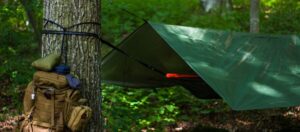
- The taut-line hitch. An adjustable knot that grips under tension but slides to tighten or loosen by hand. Perfect for guy-lines on a shelter or tarp, letting you snug the line drum-tight and adjust it as the rope stretches.
- The square (reef) knot. Joins two ropes of equal thickness or ties off a bundle, lashing, or bandage. Simple and flat, though it should not be trusted for critical loads where a bend like the sheet bend is stronger.
- The sheet bend. The right way to join two ropes together, especially ropes of different thicknesses, where a square knot would slip. Essential for extending a line when one length is not enough.
- The figure-eight. A strong stopper knot that keeps a rope’s end from slipping through a hole or a hand, and the basis of stronger climbing knots.
Learn them in the dark and under stress
A knot you can only tie slowly, in good light, while concentrating, is a knot you do not really know. The situations where knots matter most, rigging a shelter as a storm rolls in, securing a load in the rain, helping someone in a rescue, are exactly the ones where you are cold, hurried, and cannot see well. Practice each knot until your hands tie it automatically, then practice it with your eyes closed and behind your back. When your fingers know the knot without your eyes or your full attention, you truly own it, and it will be there for you in the moment that counts.
Match the knot to the job
Knowing which knot to reach for is half the skill. A quick mental map:
- Making a loop: bowline.
- Tying to an object: two half hitches, or a taut-line hitch if you need to adjust the tension.
- Joining two ropes: sheet bend, especially for unequal ropes.
- Tensioning a shelter line: taut-line hitch on the adjustable end, bowline or two half hitches on the anchor end.
- Stopping an end from slipping: figure-eight.
With just these matches, you can pitch a tarp, rig a ridgeline, secure gear, hang food away from animals, and improvise countless fixes in the field.
Good cordage makes good knots
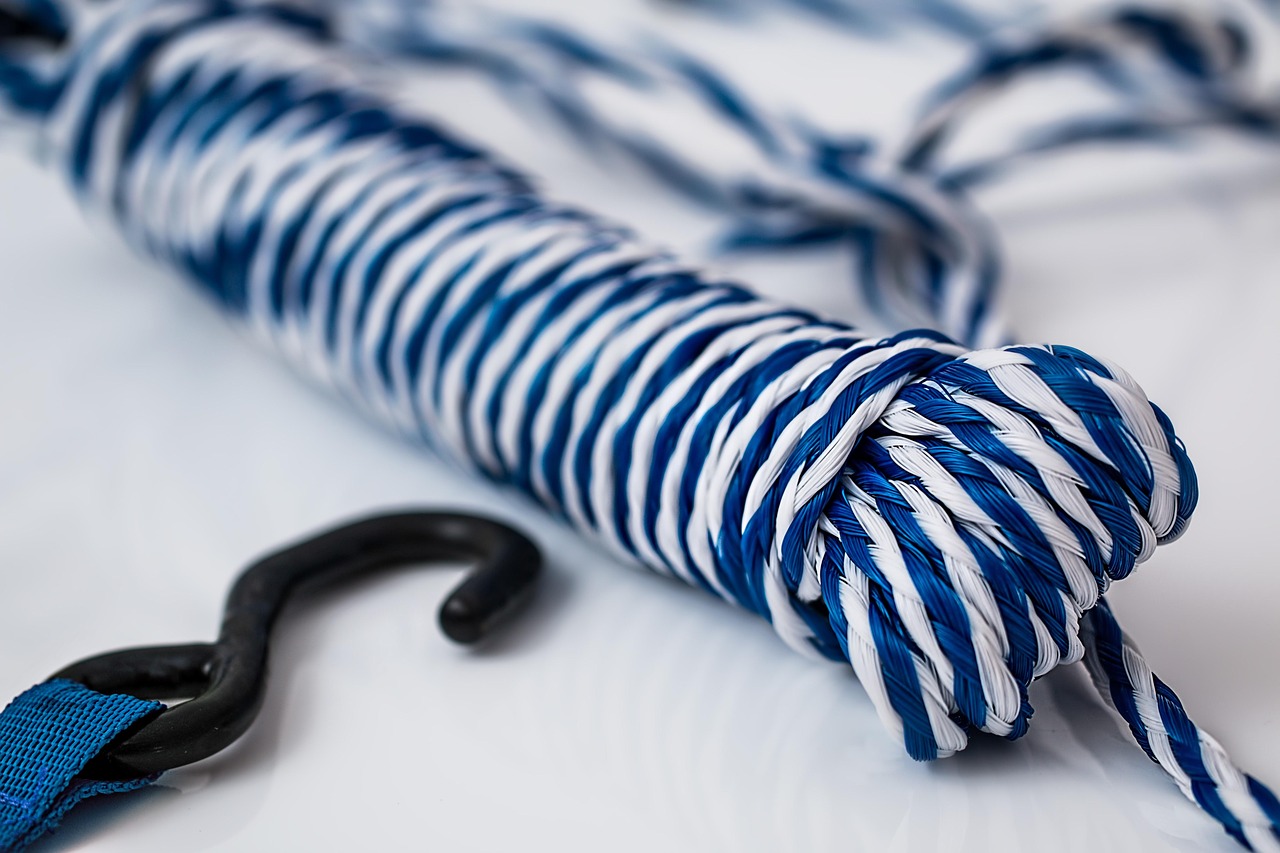
Knots are only as dependable as the rope they are tied in, and quality cordage is one of the highest-value, lowest-cost items you can carry. Paracord is the standard for good reason: light, strong, and versatile, and its inner strands can be pulled out for finer tasks like fishing line or sutures in a pinch.
The cord to practice on

Affiliate note: buy through this link and ThisTracks may earn a small commission at no extra cost to you. We only list gear that is in stock and that we would carry ourselves.
Knots serve everything else
These skills are not an isolated hobby; they support nearly every other outdoor skill. Knots rig your shelter and pitch your tarp for quick emergency cover, secure loads, and assist in rescue. A few feet of cord and a handful of knots turn you from helpless to capable across a huge range of situations.
Essential knots, condensed
- Learn a small handful: bowline, two half hitches, taut-line, square, sheet bend, figure-eight.
- The bowline is the one to know first: a fixed loop that never slips or jams.
- Practice until your hands tie each one automatically, even in the dark.
- Match the knot to the job: loop, anchor, join, tension, or stopper.
- Carry quality paracord; good knots need good cordage.
A person with a length of cord and half a dozen well-practiced knots can build, secure, join, and rescue in ways that seem almost magical to someone who only knows how to tie their shoes. It is a small investment of practice for an enormous return in capability. Pick up some paracord, learn these knots one at a time until your fingers know them cold, and you add a quiet, versatile competence that serves you for the rest of your life.