For the homesteader who wants to raise fish intensively in a controlled way, a recirculating aquaculture system, or RAS, offers a compelling approach: raising a lot of fish in a relatively small volume of water by continuously filtering and reusing that water rather than relying on a large natural pond. RAS makes serious fish production possible even where space or water is limited, but it is a technological system with real demands and dependencies. Understanding how it works and what it requires helps you decide whether it fits your homestead. This guide covers the fundamentals of building and running a recirculating system for aquaculture.
What a recirculating system is
A recirculating aquaculture system raises fish in tanks while continuously cleaning and reusing the water, rather than the fish living in a large body of water that dilutes their waste naturally. Water flows from the fish tank through filtration that removes the waste and toxins the fish produce, is re-oxygenated, and returns to the tank clean, cycling continuously so the same water is used over and over. This is what allows RAS to stock fish densely in a small volume: instead of needing a large pond to dilute waste, the filtration does the work, so you can raise many fish in a compact, controlled setup, even indoors. The trade-off is that the fish depend entirely on that filtration and circulation working continuously, since without it their waste would quickly accumulate to lethal levels in the small water volume.
The essential components
A recirculating system is built from several components working together to keep the water clean, oxygenated, and moving:
- The fish tank, where the fish live, sized to your production goals.
- Filtration, the heart of the system, typically including mechanical filtration to remove solid waste and biological filtration where beneficial bacteria convert dissolved fish waste (toxic ammonia) into far less harmful forms, exactly the biological process at the core of keeping fish-pond water quality.
- A pump, to circulate the water continuously through the system.
- Aeration, to keep the water rich in the dissolved oxygen the densely stocked fish need to breathe.
Together these keep the water in a healthy, life-supporting state despite the heavy fish load, with the biological filter in particular needing time to establish its bacterial colony before the system can safely carry many fish.
The whole system depends on continuous power
The defining reality of a recirculating aquaculture system, and the thing you must understand before building one, is that it depends utterly and continuously on its equipment running, which almost always means on electricity, so a loss of power is a genuine emergency that can kill your entire stock quickly. In a RAS, fish are stocked densely in a small water volume that can only support them because the filtration and aeration are constantly working: the pump circulates the water, the filter removes the waste, and the aeration supplies oxygen. Stop that circulation, and two things happen fast. The densely packed fish rapidly deplete the limited oxygen and begin to suffocate, and their waste starts accumulating toward toxic levels with no filtration to remove it. Because the system is intensive and the water volume small, there is little buffer, so a power outage of even a few hours can be catastrophic, wiping out all the fish, unlike a large natural pond that changes slowly and forgives a lot. This makes backup power not a luxury but a necessity for a serious RAS, whether a generator, battery backup, or another reliable fail-safe, along with monitoring and alarms so you know immediately if something fails. It also makes RAS, for all its productivity, more vulnerable to disruption than low-tech pond methods, a real consideration for the preparedness-minded, since a resilient homestead values systems that fail gracefully. None of this means RAS is a poor choice, it is genuinely powerful for intensive production in limited space, but it means you must go in understanding that you are building a system whose fish live only as long as the power and equipment keep running, and you must plan for backup and failure accordingly. Respect this dependency, build in redundancy, and RAS can be highly productive; ignore it, and a single outage can undo everything.
Weighing RAS for your homestead
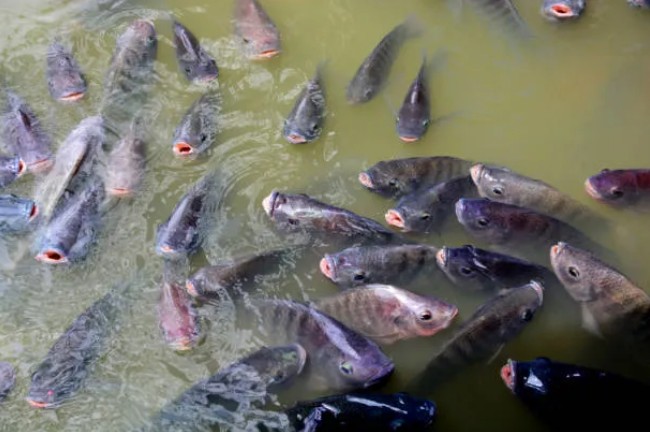
A recirculating system is best suited to homesteaders who want intensive, controlled fish production, especially where space or water for a large pond is limited, or who want to raise fish indoors or year-round, and who are prepared to manage a technological system with its dependencies. It pairs naturally with raising a hardy fish like tilapia and shares its core water-management principles with all recirculating aquaponics setups, where the fish waste feeds plants. Against its intensive productivity you must weigh its complexity, cost, management demands, and critical dependence on continuous power, which make it less resilient than simpler methods. For the right homesteader, prepared for those demands and equipped with backup power, RAS offers impressive fish production in a compact footprint; for those wanting simplicity and resilience, a more traditional pond may suit better. Start small to learn the system before scaling up.
Recirculating aquaculture, condensed
- RAS raises fish densely in small water volumes by continuously filtering and reusing the water.
- Core components: fish tank, mechanical and biological filtration, a pump, and aeration.
- The biological filter’s bacteria must establish before the system can safely carry many fish.
- The system depends utterly on continuous power; an outage can kill all the fish fast.
- Backup power, monitoring, and alarms are necessities, not luxuries, for a serious RAS.
A recirculating aquaculture system brings intensive, controlled fish farming within reach of a homestead with limited space or water, raising many fish in a compact setup by continuously cleaning and reusing their water. That power comes with real complexity and, above all, a critical dependence on continuous filtration, aeration, and the power that drives them, making backup power and vigilant monitoring essential. Understand that dependency and plan for it, start small to master the system, and a recirculating setup can give your homestead a highly productive source of fish, a serious tool for the self-reliant grower who is ready for what it demands.